
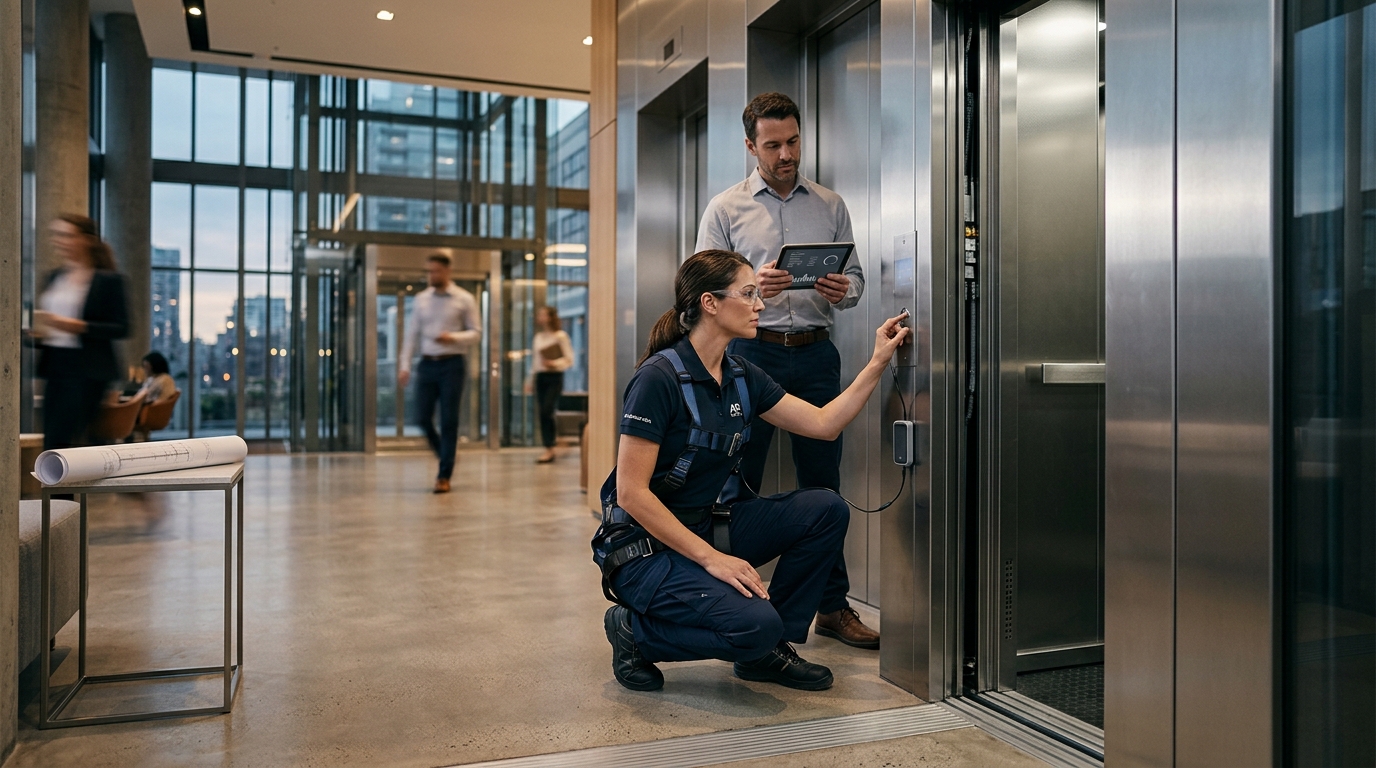
Modern commercial properties increasingly rely on connected infrastructure to optimize vertical transportation. McKinsey workplace data indicates that approximately 68 percent of enterprise real estate managers now prioritize predictive maintenance protocols to reduce operational downtime. This shift directly impacts how facility directors evaluate vertical transportation upgrades. Installing a smart IoT elevator installation system requires careful assessment of existing shaft infrastructure, network bandwidth allocation, and strict adherence to regional building codes. Office building elevator upgrades must balance tenant convenience with rigorous safety compliance. (Contact https arelevatorusa com)
Feasibility Assessment and Infrastructure Readiness
Before committing to a full system deployment, facility managers must evaluate existing mechanical and electrical infrastructure. An IoT elevator monitoring system is a network of embedded sensors and wireless transmitters that continuously track cabin movement, door cycle frequency, and motor temperature. Building engineers typically conduct a comprehensive shaft audit to verify load-bearing capacity and power distribution limits. This initial evaluation prevents costly retrofits during the final installation phase. (Elevator Code Compliance Services)
Most mid-rise commercial structures built after 2010 already contain the necessary conduit pathways for modern data transmission. Older facilities often require additional wiring upgrades to support continuous data streaming. A licensed contractor will map current control panel architectures to determine compatibility with modern communication protocols. This technical audit establishes the baseline for project scoping and budget allocation. (Annual Inspection Deficiency Repair)
Core IoT System Components and Integration
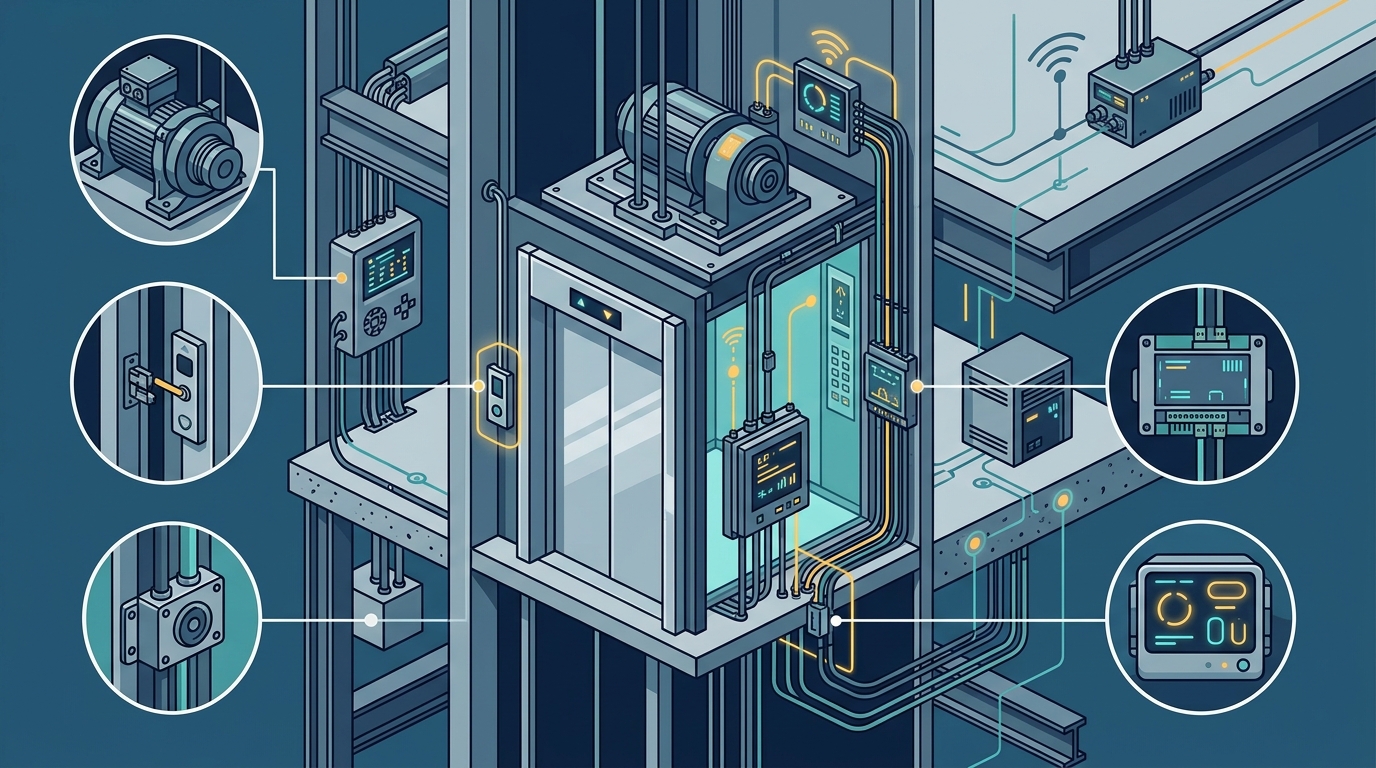
Successful deployment requires precise hardware synchronization across multiple subsystems. A smart IoT elevator installation system integrates vibration sensors, door position encoders, and machine room telemetry units into a centralized dashboard. These components communicate through encrypted wireless protocols to prevent unauthorized access. Facility directors must verify that existing building management networks can handle the additional bandwidth without compromising security.
The integration process typically involves mounting compact data acquisition modules near the main controller. Technicians then configure secure API endpoints to feed real-time metrics into cloud-based analytics platforms. This architecture enables predictive maintenance algorithms to flag potential component failures before they cause service interruptions. Office building elevator upgrades become significantly more cost-effective when leveraging this continuous data feedback loop.
Regulatory Compliance and Safety Protocols
Vertical transportation systems operate under strict jurisdictional oversight to protect public safety. ASME safety codes mandate rigorous testing procedures for all modernized control systems and emergency communication devices. Facility managers must coordinate with certified inspectors to verify that new hardware does not interfere with existing fail-safe mechanisms. NFPA compliance standards further require redundant power supplies and emergency backup communication channels.
Annual inspection deficiency repair services often address gaps left by previous modernization projects. Licensed technicians will verify that all new IoT modules meet current fire rating requirements and seismic isolation standards. This rigorous verification process ensures that office building elevator upgrades satisfy both municipal building departments and insurance underwriters. Proper documentation during this phase prevents costly project delays during final commissioning.
Modernization Pathways and Hardware Selection
Commercial property owners typically choose between complete machine room replacement and targeted control panel modernization. Complete machine room replacement involves installing new traction motors, gearless drives, and regenerative power converters. Targeted control panel modernization focuses exclusively on upgrading logic controllers, variable frequency drives, and communication interfaces. Both pathways require specialized engineering to maintain existing counterweight and cable configurations.
Selecting the appropriate hardware depends on building traffic patterns and peak usage hours. High-traffic corporate towers benefit from destination dispatch algorithms that optimize car assignment. Smaller professional buildings often utilize simplified call-queue optimization to reduce energy consumption. A modernization pathway analysis is a structured engineering evaluation that compares hardware upgrades against projected operational savings.
Operational Impact and Tenant Experience
Connected vertical transportation directly influences tenant satisfaction and lease renewal rates. Predictive maintenance algorithms reduce unexpected breakdowns by identifying worn rollers, misaligned guides, and motor degradation. Facility managers receive automated alerts when performance metrics deviate from established baselines. This proactive approach eliminates emergency service calls and preserves professional workplace environments.
Real-time monitoring also improves accessibility compliance by tracking door cycle times and leveling accuracy. Building operators can adjust scheduling parameters to accommodate peak morning and afternoon traffic flows. Tenant feedback consistently highlights reliability as a primary factor when evaluating commercial lease terms. Office building elevator upgrades that prioritize continuous uptime directly support higher occupancy rates and improved asset valuation.
| System Component | Complete Machine Room Replacement | Targeted Control Panel Modernization | IoT Integration Layer |
|---|---|---|---|
| Motor and Drive Technology | Regenerative gearless traction motors | Variable frequency drive upgrades | Telemetry data acquisition modules |
| Control Architecture | Full microprocessor-based dispatch system | Logic controller and relay replacement | Encrypted wireless communication gateways |
| Energy Consumption Profile | 75 percent energy reduction | 40 percent energy reduction | Real-time power optimization algorithms |
| Implementation Timeline | Eight to twelve weeks | Four to six weeks | Two to three weeks |
Key Takeaways
- Smart IoT elevator installation systems require comprehensive shaft audits before deployment.
- Predictive maintenance algorithms reduce unexpected breakdowns by identifying worn components early.
- ASME safety codes mandate rigorous testing procedures for all modernized control systems.
- Complete machine room replacement delivers up to 75 percent energy reduction.
- Targeted control panel modernization offers faster implementation with moderate efficiency gains.
- Real-time monitoring improves accessibility compliance and peak traffic management.
- Licensed contractors must verify all new hardware meets current fire rating requirements.
Frequently Asked Questions
Can existing elevator shafts support modern IoT sensor arrays?
Most standard commercial shafts easily accommodate compact data acquisition modules without structural modification. Building engineers verify load distribution and conduit availability during the initial feasibility assessment.
How does IoT integration affect emergency communication protocols?
Connected systems maintain redundant hardwired emergency communication channels to satisfy jurisdictional safety mandates. Facility managers receive automated alerts when performance metrics deviate from established baselines.
What is the typical timeline for integrating IoT monitoring into active office buildings?
Standard integration projects require two to three weeks to complete without disrupting daily operations. Licensed technicians schedule non-invasive mounting procedures during off-peak business hours.
Do smart elevator systems require dedicated building management network bandwidth?
Modern gateways utilize compressed data packets that consume minimal network resources. Building IT directors typically allocate isolated VLAN segments to prevent security vulnerabilities.
How frequently do predictive maintenance algorithms require recalibration?
Cloud-based analytics platforms automatically adjust baseline parameters based on seasonal traffic fluctuations. Facility managers receive quarterly performance reports to verify system accuracy.
Next Steps for Implementation
Ready to evaluate your current vertical transportation infrastructure? Our licensed engineering team conducts comprehensive feasibility assessments to determine optimal modernization pathways. Visit our Giga Lift Smart IoT Elevator Services page to review detailed installation protocols and scheduling options. Explore our New Elevator Supply & Installation Services to understand baseline equipment requirements. Review our Upgrading, Alteration & Modernization Services to compare hardware pathways. Learn more about our company background and service commitments. Contact our project management division today to schedule a site evaluation and receive a customized capital expenditure proposal.