
Elevator Upgrade: 7 Key Factors to Consider When Modernizing Your Elevator System
Upgrading an elevator is one of the most impactful investments a building owner can make. Whether your system is decades old or simply underperforming, a well-planned modernization improves safety, reduces operating costs, and keeps your property compliant with current codes. But where do you start? From assessing the age of your equipment to understanding energy-efficiency gains and navigating ASME safety standards, there are several critical factors that determine whether your project succeeds or stalls. This guide breaks down the seven most important considerations so you can approach your next elevator modernization with confidence.
1. Age and Condition of the Current System
Elevator modernization is any change to equipment, including its parts, components, and subsystems, other than maintenance, repair, or replacement. That distinction matters because it determines the scope and regulatory requirements of your project. Most industry experts recommend evaluating modernization once a system reaches 15 to 20 years of service.
Older elevators tend to require frequent repairs, experience longer downtimes, and rely on parts that are increasingly difficult to source. If your building's elevator suffers recurring breakdowns, an annual inspection and deficiency review can reveal whether targeted repairs or a full upgrade is the smarter path forward.
2. Code Compliance and Safety Standards
Code compliance is the process of ensuring your elevator system meets all applicable federal, state, and local safety regulations. In the United States, the primary benchmark is the ASME A17.1 Safety Code for Elevators and Escalators. Building codes evolve frequently to reflect new safety standards and technological advancements, and an outdated elevator may no longer comply with current regulations.
Common code-related issues during modernization include emergency power compatibility, machine room ventilation, electrical capacity, and fire alarm integration. Nevada enforces its own adoption schedule for ASME updates, so building owners in Las Vegas, Reno, and surrounding areas should consult a licensed provider like AR Elevator USA for code compliance guidance specific to their jurisdiction.
3. Energy Efficiency and Operating Costs
Energy efficiency is a top driver of elevator modernization ROI. Modern systems incorporate technologies that significantly reduce power consumption compared to legacy equipment. Key energy-saving features include:
- Regenerative drives that capture and reuse braking energy
- LED cab lighting that uses a fraction of the energy of incandescent bulbs
- Standby mode that powers down non-essential systems when the elevator is idle
- Variable frequency drives (VFDs) that adjust motor output based on demand
AR Elevator USA offers dedicated power efficiency solutions designed to lower utility bills while extending equipment life.
4. Core Components to Upgrade
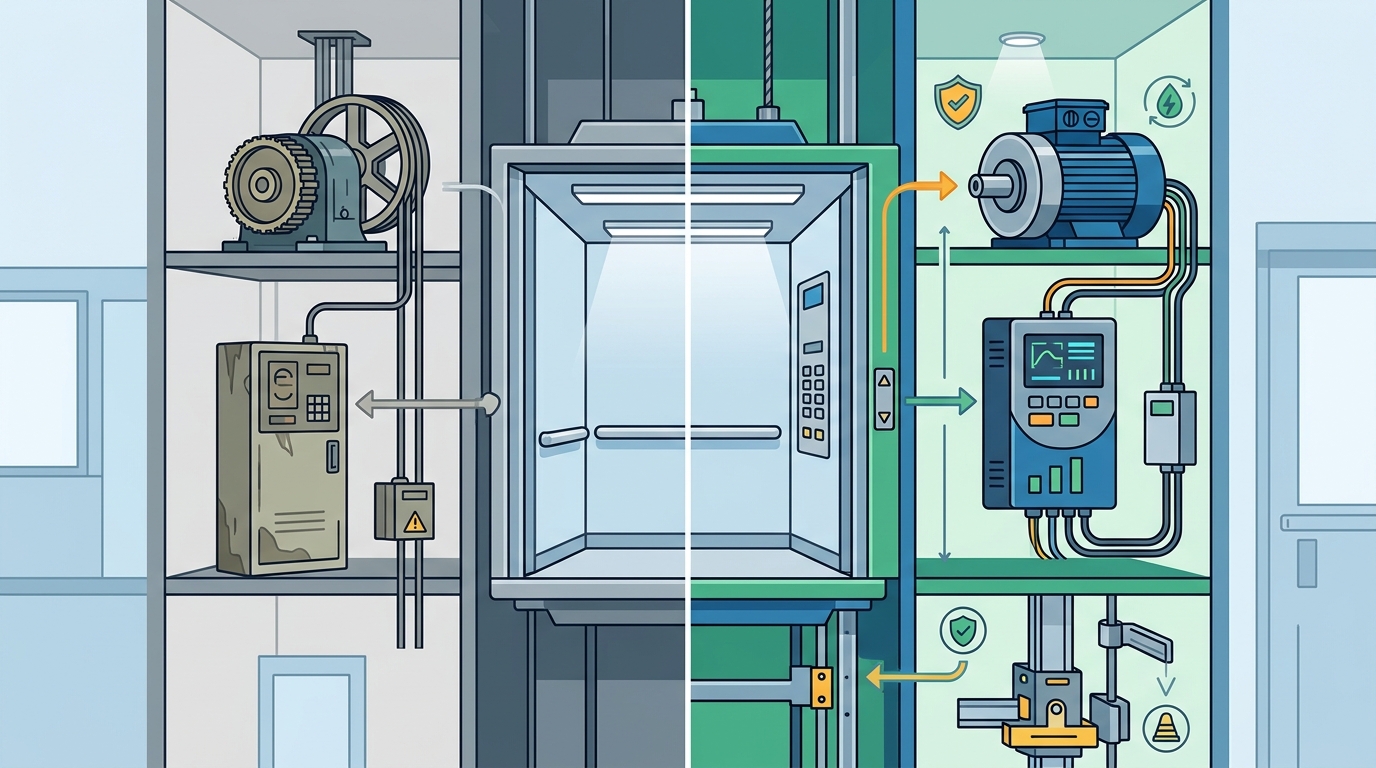
Not every modernization requires a complete overhaul. Understanding which components deliver the highest impact helps you allocate budget wisely. The table below compares five key components commonly addressed during an upgrade:
| Component | Function | Why Upgrade? |
|---|---|---|
| Controller | Manages car movement, dispatching, and logic | Improves ride quality, enables smart features |
| Door Operator | Opens and closes hoistway and car doors | Reduces the #1 cause of elevator callbacks |
| Fixtures (Buttons & Indicators) | Rider interface inside cab and at landings | ADA compliance and improved user experience |
| Power Unit / Machine | Drives the elevator car via hydraulic or traction system | Better floor leveling and energy efficiency |
| Safety Systems | Interlocks, sensors, fire service controls | Meets current ASME A17.1 requirements |
For buildings using IoT-enabled monitoring, AR Elevator USA's Giga Lift smart elevator platform can integrate with modernized controllers to provide real-time diagnostics and predictive maintenance alerts.
5. Downtime Planning and Building Impact
Downtime planning is the process of scheduling elevator work to minimize disruption to tenants, visitors, and daily operations. A phased modernization approach lets you keep at least one car running while others are upgraded. Industry best practice is to schedule work during off-peak hours and maintain clear communication throughout the project.
Discuss realistic timelines upfront with your contractor. AR Elevator USA provides transparent project schedules and offers 24/7 emergency response should an unexpected issue arise during or after the upgrade.
6. Budget, ROI, and Financing
Modernization costs vary widely based on building height, number of elevators, component scope, and local labor rates. A micro-mod focusing on the controller and fixtures may cost a fraction of a full-system overhaul that includes the machine, cab interior, and hoistway equipment. When evaluating ROI, factor in:
- Reduced emergency repair costs
- Lower energy bills
- Increased property value and tenant satisfaction
- Avoided fines from code violations
Request itemized proposals from at least two qualified contractors and compare not just price, but warranty terms, maintenance inclusions, and post-installation support.
7. Choosing the Right Elevator Partner
The contractor you select can make or break your modernization project. Look for a licensed, full-service provider with experience across all major elevator manufacturers and types. Key traits to evaluate include transparent pricing, a strong local track record, and the ability to handle everything from new installations to preventive maintenance.
AR Elevator USA is a family-owned company proudly serving Nevada and the Western region. With expertise spanning commercial, residential, and specialty lift systems, the team delivers code-compliant solutions backed by honest pricing and responsive service.
Key Takeaways
- Evaluate your elevator's age, breakdown frequency, and parts availability before deciding between repair and modernization.
- ASME A17.1 compliance is non-negotiable; codes change regularly and vary by state.
- Energy-efficient upgrades like regenerative drives and VFDs can dramatically cut operating costs.
- Controllers and door operators offer the highest-impact improvements per dollar spent.
- Plan downtime carefully with phased scheduling to keep building operations running.
- Always compare proposals on warranty, scope, and post-project support, not just price.
- Partner with a licensed, local elevator company that knows your jurisdiction's codes.
Frequently Asked Questions
How do I know if my elevator needs modernization or just repair?
If your system experiences frequent breakdowns, relies on obsolete parts, or fails annual inspection items repeatedly, modernization is likely the better long-term investment. A professional troubleshooting assessment can help determine the right path.
What is ASME A17.1?
ASME A17.1 is the Safety Code for Elevators and Escalators published by the American Society of Mechanical Engineers. It is the primary standard used across the United States to govern elevator design, installation, maintenance, and modernization.
How long does an elevator modernization take?
Timelines depend on scope. A controller-only upgrade on a single elevator may take two to four weeks. A full modernization of multiple cars in a high-rise can span several months. Your contractor should provide a detailed schedule before work begins.
Will my building need permits for an elevator upgrade?
Yes. Most jurisdictions, including Nevada, require permits and plan reviews before modernization work starts. Your elevator partner should handle permitting and coordinate with local inspectors on your behalf.
Can I modernize one elevator at a time?
Absolutely. Phased modernization is the most common approach in multi-elevator buildings. It allows at least one car to remain operational, reducing tenant inconvenience.
How much does elevator modernization cost?
Costs range from roughly $30,000 for a basic micro-mod to $250,000 or more for a complete overhaul on a large commercial elevator. Request a detailed, itemized quote from your provider to understand exactly what is included.
Does modernization improve property value?
Yes. Updated elevators enhance tenant satisfaction, reduce liability risk, and signal to prospective buyers or tenants that the building is well maintained. Energy savings also improve net operating income.
Ready to Upgrade Your Elevator System?
AR Elevator USA provides free, no-obligation assessments for building owners across Nevada. Our licensed technicians evaluate your current system, identify code gaps, and deliver a transparent modernization plan tailored to your budget and timeline. Request a quote today and take the first step toward a safer, more efficient elevator.