
Smart IoT Elevator Installation for Office Buildings: The Complete Guide
Yes, you can install a smart IoT elevator system in your office building, and it may be one of the most impactful upgrades you make this decade. IoT-enabled elevators use connected sensors, cloud analytics, and AI-driven controls to optimize ride efficiency, predict maintenance needs, and integrate with your building management system. Whether you are constructing a new commercial property in Nevada or modernizing an existing one, understanding how smart elevator technology works will help you make an informed decision. This guide covers what IoT elevators are, how they work, what they cost, and how to get started with a trusted full-service elevator partner.
What Is a Smart IoT Elevator System?
A smart IoT elevator is an elevator system that uses Internet of Things sensors, cloud computing, and artificial intelligence to monitor performance, optimize operations, and communicate with other building systems in real time. Unlike traditional elevators that operate on fixed programming, IoT-enabled systems continuously learn from usage data and adjust accordingly.
The elevator control systems market is projected to reach $11.6 billion by 2030, driven largely by demand for smart elevator features and IoT integration. This growth signals that IoT elevators are no longer experimental; they are becoming a standard in modern commercial construction.
How IoT Elevator Technology Works
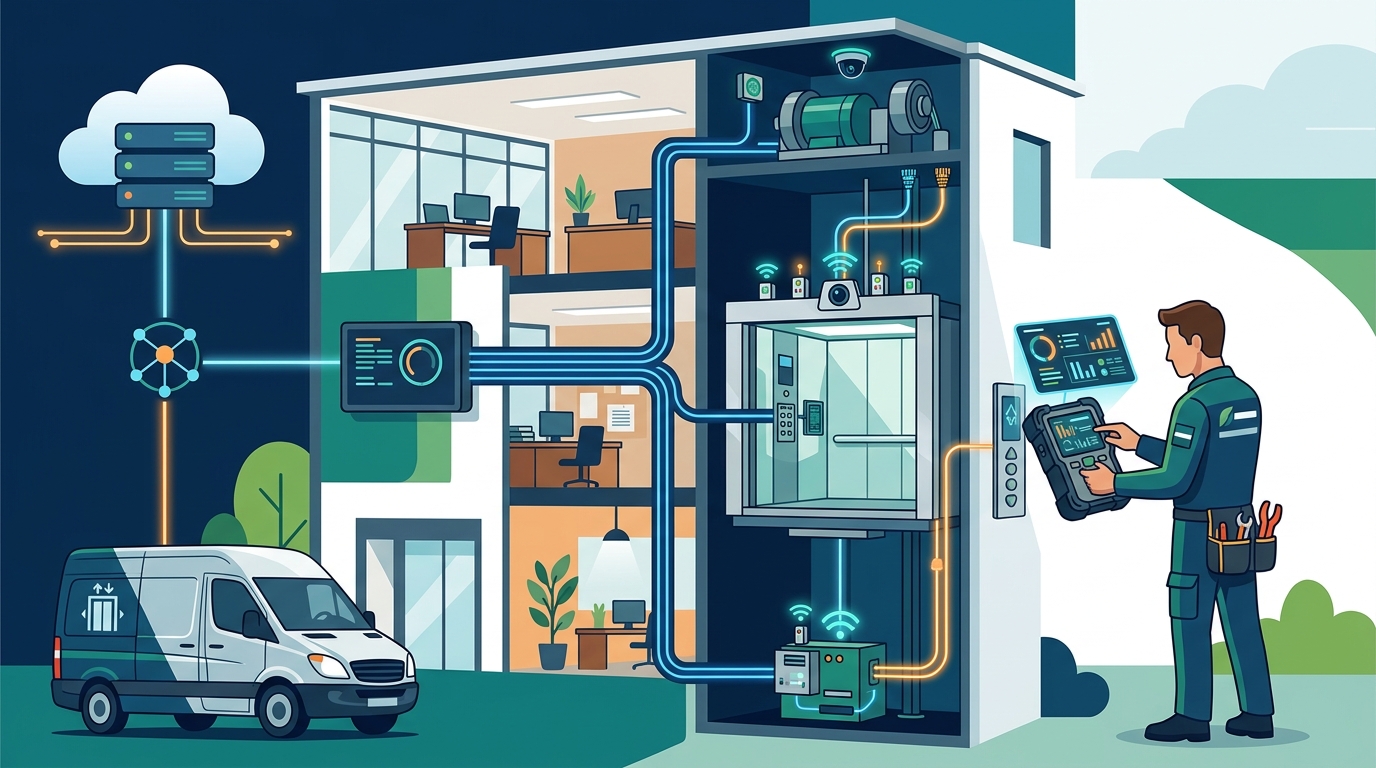
An IoT elevator system connects hardware sensors to a central cloud platform via Wi-Fi or LAN. These sensors monitor motor temperature, door cycles, vibration levels, cab position, and passenger load in real time. The data feeds into AI algorithms that make intelligent decisions about dispatching, energy usage, and maintenance scheduling.
Predictive Maintenance
Predictive maintenance is the process of using real-time sensor data to identify potential component failures before they cause downtime. Instead of waiting for a breakdown, the system flags early warning signs, such as motor overheating or unusual vibration, so technicians can intervene proactively. AR Elevator USA offers preventive maintenance programs that pair perfectly with IoT monitoring.
Destination Dispatch
Destination dispatch is a traffic management system that groups passengers traveling to the same floor into the same elevator car. This reduces the number of stops per trip, cuts wait times, and lowers energy consumption during peak office hours.
Building System Integration
Modern smart elevators sync with building management systems (BMS), access control, fire safety, and HVAC. This creates a seamless occupant experience where the elevator anticipates demand based on room bookings, security credentials, and real-time occupancy data.
Key Benefits for Office Buildings
| Feature | Traditional Elevator | Smart IoT Elevator |
|---|---|---|
| Maintenance approach | Scheduled / reactive | Predictive / condition-based |
| Energy optimization | Fixed operation | AI-adjusted, regenerative drives |
| Wait time management | First-come, first-served | Destination dispatch grouping |
| Remote monitoring | Not available | 24/7 cloud dashboard |
| BMS integration | Limited or none | Full integration (HVAC, access, fire) |
| Touchless operation | No | Mobile app, voice, facial recognition |
For office building owners and property managers, the bottom line impact is significant: reduced downtime, lower energy bills, improved tenant satisfaction, and longer equipment lifespan. IoT-enabled elevators also contribute to building certifications like LEED and DGNB, which can increase property value.
New Installation vs. Retrofit: Which Is Right for You?
New Construction
If you are building a new office, integrating IoT from the start is the most cost-effective path. You can spec smart controllers, sensors, and network infrastructure during design, avoiding costly retrofits later. AR Elevator USA provides new elevator supply and installation services that incorporate the latest IoT-ready systems.
Existing Buildings
Already have elevators? Retrofit IoT systems can be added to most existing elevator types and manufacturers. IoT retrofit kits use custom hardware that connects with your current controller through standard interfaces. AR Elevator USA specializes in elevator modernization and can assess whether your current system supports a smart upgrade.
Learn more about our dedicated Giga Lift Smart Elevator IoT platform designed specifically for commercial and office building applications.
Code Compliance and Safety Considerations
Any elevator installation or modernization in Nevada must meet ASME A17.1 safety codes and local jurisdiction requirements. Smart features do not exempt you from these standards. In fact, IoT monitoring can help you stay compliant by tracking inspection schedules, logging safety events, and generating reports for annual inspection and deficiency repairs.
AR Elevator USA ensures every project, whether a new IoT installation or a retrofit, is fully code-compliant. Regulatory requirements for elevator safety are increasingly encouraging adoption of connected monitoring solutions that reduce mechanical failures and improve response times.
Choosing the Right Elevator Partner
Not every elevator company has the expertise to integrate IoT systems properly. When evaluating providers, look for these qualities:
- Full-service capability: The partner should handle design, installation, maintenance, and emergency response under one roof.
- IoT-specific experience: Ask for case studies or references involving smart elevator deployments in commercial buildings.
- Code compliance track record: Verify the company is licensed and has a clean inspection history in your state.
- Transparent pricing: Smart upgrades should come with clear, itemized quotes with no hidden fees.
- 24/7 support: IoT systems still need human backup. Confirm your partner offers round-the-clock emergency service.
AR Elevator USA is a family-owned, licensed elevator company proudly serving Nevada and the Western region with honest pricing, precise engineering, and responsive service across all elevator types and manufacturers.
Key Takeaways
- Smart IoT elevator systems can be installed in both new and existing office buildings.
- IoT sensors enable predictive maintenance, reducing unexpected downtime and repair costs.
- Destination dispatch and AI-driven algorithms cut passenger wait times and energy usage.
- Smart elevators integrate with BMS, access control, fire safety, and HVAC for a connected building experience.
- All installations must meet ASME A17.1 and local Nevada code requirements regardless of IoT features.
- Retrofit IoT kits make it possible to upgrade most existing elevator systems without full replacement.
- Choosing a licensed, full-service partner like AR Elevator USA ensures proper integration and ongoing support.
Frequently Asked Questions
Can I add IoT to my existing office elevator?
Yes. Retrofit IoT kits connect to most existing elevator controllers via Wi-Fi or LAN, adding remote monitoring, predictive maintenance, and smart dispatching without replacing the entire system. AR Elevator USA offers modernization services that include IoT integration.
How much does a smart IoT elevator installation cost?
Costs vary widely based on the number of elevators, building height, and feature set. A basic IoT retrofit for a single elevator can start around $10,000 to $25,000, while a full new smart elevator installation for a mid-rise office may range from $75,000 to $200,000 or more. Contact AR Elevator USA to request a customized quote.
Will a smart elevator reduce my building's energy costs?
Yes. IoT elevators use regenerative drives and AI-optimized dispatching to reduce unnecessary trips and recover energy during braking. Many building owners report energy savings of 15% to 30% compared to conventional systems.
Is an IoT elevator system safe and code-compliant?
Absolutely. Smart features supplement, not replace, mandatory safety systems. All installations must comply with ASME A17.1 standards. IoT monitoring actually improves safety by detecting issues earlier and logging events automatically.
How long does installation take?
A new smart elevator installation typically takes 8 to 16 weeks depending on building complexity. An IoT retrofit on an existing elevator can often be completed in 1 to 3 weeks with minimal disruption to building operations.
What happens if the IoT system loses connectivity?
Smart elevators are designed with failsafe operation. If cloud connectivity drops, the elevator continues to function using its onboard controller. IoT features like remote monitoring resume automatically once the connection is restored.
Do smart elevators require special maintenance?
Smart elevators still need regular physical maintenance, but IoT monitoring makes the process more efficient. Sensors flag specific components that need attention, so technicians spend less time diagnosing and more time fixing. Explore AR Elevator USA's preventive maintenance plans for details.
Ready to Upgrade Your Office Elevator?
If you are considering a smart IoT elevator for your office building in Nevada or the Western region, AR Elevator USA is ready to help. From initial assessment through installation and ongoing maintenance, our team delivers safe, code-compliant solutions with transparent pricing. Contact AR Elevator USA today to schedule a free consultation and discover how a smart elevator system can transform your building.