
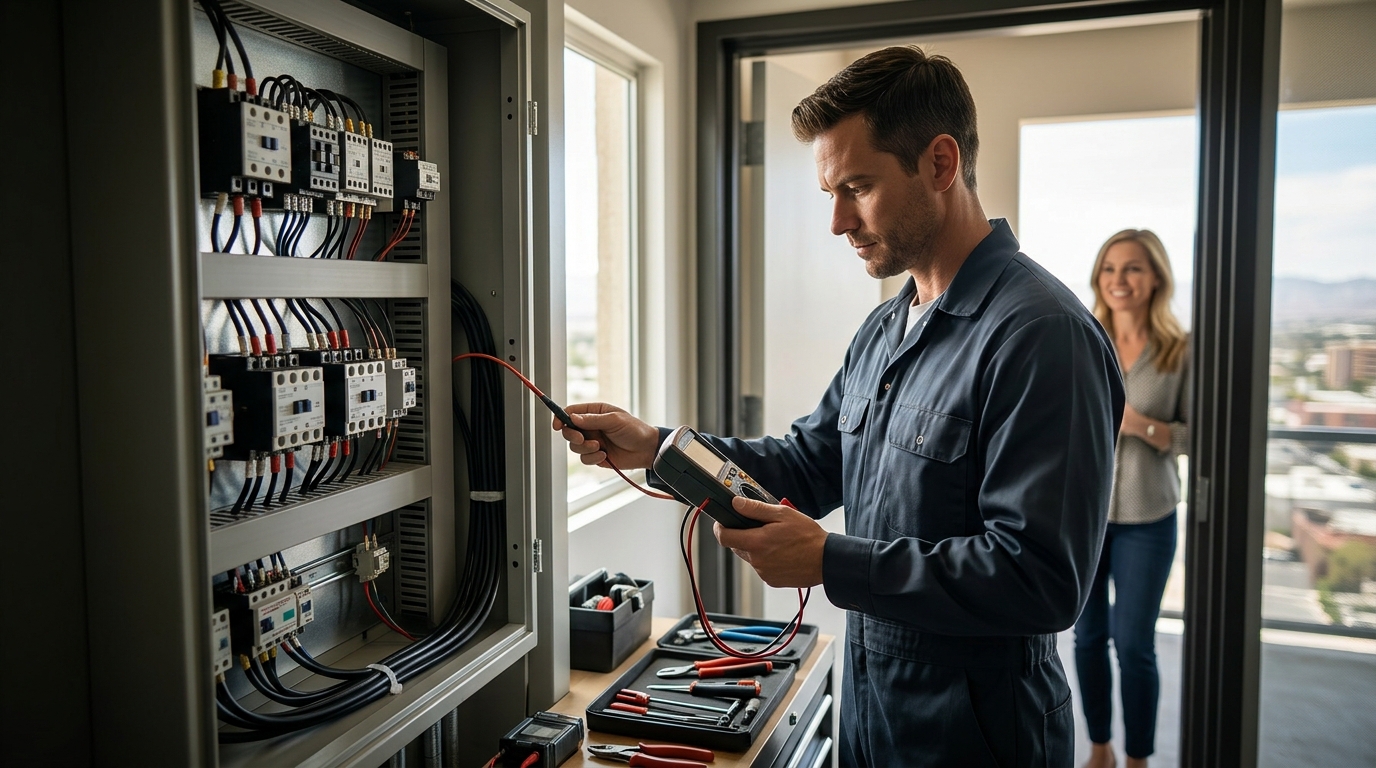
Elevator Maintenance Guide: How to Ensure Safety and Reliability
Keeping your elevator safe and reliable is not optional. It is a legal obligation, a liability shield, and a direct investment in tenant satisfaction. Whether you manage a mid-rise office in Las Vegas or a residential building in Henderson, a structured maintenance program protects riders, extends equipment life, and prevents costly emergency shutdowns. In this guide, AR Elevator USA breaks down the essential steps every building owner and property manager should follow to maintain elevator installations to the highest standards of safety and code compliance.
What Is Elevator Preventive Maintenance?
Preventive maintenance is a scheduled program of inspections, lubrication, adjustments, and component replacements designed to keep an elevator operating safely before problems occur. Unlike reactive repairs that happen after a breakdown, preventive maintenance catches wear early and keeps your system code-compliant.
A Maintenance Control Program (MCP) is a documented plan required under ASME A17.1 that outlines every task, frequency, and procedure needed to maintain an elevator system. Missing or incomplete MCPs are among the most common inspection violations. AR Elevator USA helps building owners develop and execute these programs through our elevator preventive maintenance services.
Why Regular Elevator Maintenance Matters
Elevator systems contain thousands of mechanical and electrical components that degrade with use. Regular maintenance reduces unplanned downtime by catching worn sheaves, fraying cables, and deteriorating door operators before they cause a shutdown or, worse, an entrapment.
Safety and Liability
Adhering to ASME A17.1 ensures the safety of passengers and operational compliance with state and local laws. It minimizes liability risks and promotes efficient vertical transportation. Building owners who skip scheduled service expose themselves to code violations, fines, and personal-injury claims.
Cost Savings
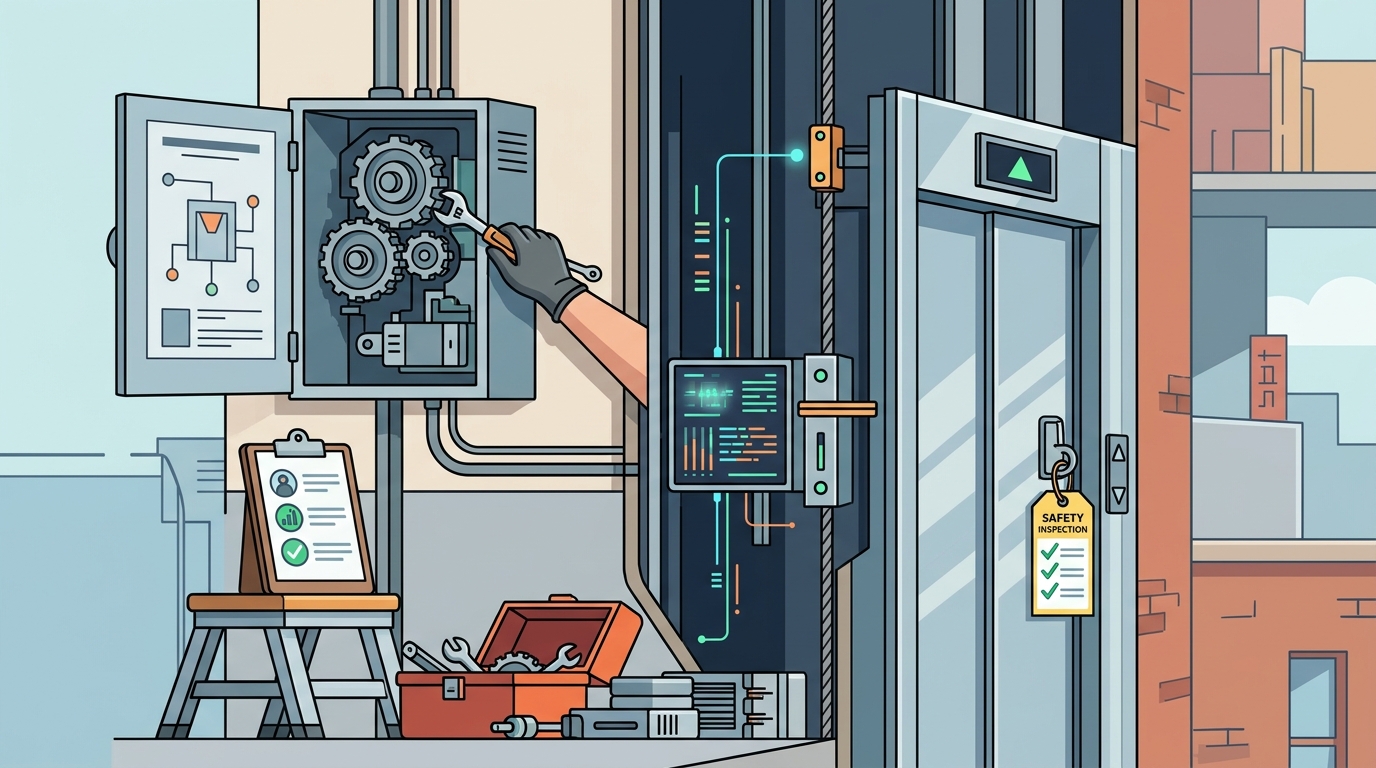
Industry data consistently shows that buildings with active preventive maintenance contracts spend 20-40% less on total elevator costs over a 10-year period compared to those relying on reactive repairs alone. A well-maintained elevator also holds its value longer, which matters when it is time to decide between modernization and replacement.
Essential Elevator Maintenance Checklist
The following table outlines core maintenance tasks, recommended frequencies, and why each item matters.
| Maintenance Task | Frequency | Why It Matters |
|---|---|---|
| Door operator and interlock inspection | Monthly | Door malfunctions account for roughly 80% of elevator service calls |
| Lubrication of guide rails and sheaves | Monthly to quarterly | Reduces friction, noise, and premature wear |
| Safety device testing (governors, buffers, brakes) | Annually / per code cycle | Ensures emergency stopping systems function correctly |
| Electrical connections and controller check | Quarterly | Prevents relay failures and erratic car behavior |
| Pit inspection and cleaning | Monthly | Removes debris, checks for water intrusion and buffer condition |
| Cab lighting, ventilation, and emergency phone test | Monthly | Required for code compliance and rider comfort |
| Hoist rope or hydraulic cylinder inspection | Semi-annually | Detects rope wear or cylinder drift before failure |
Need help building a custom checklist for your property? Explore our commercial elevator inspection checklist for a detailed breakdown.
Inspection Frequency and Code Requirements
ASME A17.1 is the Safety Code for Elevators and Escalators, established by the American Society of Mechanical Engineers. It sets minimum requirements for installation, operation, maintenance, inspection, and testing of elevators across North America.
Nevada-Specific Requirements
Nevada enforces its own adoption of the ASME code and has introduced additional requirements. Building owners should review the latest Nevada elevator code compliance requirements for 2026 to stay current. Key inspection intervals include:
- Hydraulic elevators: annual inspections with periodic full-pressure tests.
- Traction elevators: annual inspections plus five-year full-load safety tests.
- Residential elevators: intervals vary; consult your Authority Having Jurisdiction (AHJ).
AR Elevator USA also provides annual inspection deficiency repair services to resolve any issues found during state inspections quickly.
Common Maintenance Mistakes to Avoid
Even well-intentioned building owners make errors that compromise elevator safety. Here are the most frequent pitfalls:
Deferred Maintenance
Deferred maintenance is the practice of postponing scheduled service to save short-term costs. It is the single biggest contributor to costly emergency repairs and code violations. Skipping even one quarterly visit can allow minor issues to cascade into major failures.
Poor Recordkeeping
Failure to maintain thorough and accessible service logs is a common inspection violation. Inspectors will ask for your MCP, service history, and test certificates. If they are missing, you face automatic deficiencies.
Using Unqualified Technicians
Elevator work requires licensed technicians who understand both the equipment and local code. Hiring unlicensed workers can void warranties, create safety hazards, and result in fines. AR Elevator USA employs licensed professionals for every elevator repair and service call.
When Maintenance Is Not Enough: Modernization
Elevator modernization is the process of upgrading major components, such as controllers, door operators, and fixtures, to extend the life of an existing elevator without full replacement. If your elevator is more than 20 years old and repair frequency is increasing, maintenance alone may no longer be cost-effective.
Signs it is time to consider modernization include frequent breakdowns, obsolete parts, rising energy costs, and failure to meet current ADA or code standards. Learn more about your options on our elevator modernization page.
Key Takeaways
- Preventive maintenance is a scheduled program that catches problems before they cause breakdowns or code violations.
- ASME A17.1 requires a documented Maintenance Control Program (MCP) for every elevator installation.
- Door-related issues account for the majority of elevator service calls, making monthly door inspections critical.
- Nevada has state-specific code requirements that may exceed the base ASME standard.
- Deferred maintenance and poor recordkeeping are the top causes of inspection failures.
- Elevator modernization should be evaluated when repair costs and downtime consistently rise.
- Always use licensed, qualified elevator technicians to protect safety, compliance, and warranties.
Frequently Asked Questions
How often should an elevator be serviced?
Most commercial elevators require monthly preventive maintenance visits. High-traffic buildings such as hotels and hospitals may benefit from more frequent service. Annual state inspections are also required in Nevada.
What is a Maintenance Control Program (MCP)?
A Maintenance Control Program is a written document required by ASME A17.1 that details every maintenance task, its frequency, and the procedures to follow. It must be kept on-site and available for inspectors.
What does ASME A17.1 cover?
ASME A17.1 is the primary safety code in North America covering the design, construction, installation, operation, inspection, testing, maintenance, alteration, and repair of elevators and escalators.
How much does elevator maintenance cost?
Costs vary by elevator type, age, and building traffic. A typical preventive maintenance contract for a single commercial elevator ranges from $250 to $750 per month. Visit our guide on elevator preventive maintenance costs for a detailed breakdown.
What happens if I skip scheduled maintenance?
Skipping maintenance leads to increased breakdowns, higher repair costs, potential code violations, and serious safety risks including passenger entrapment. It can also void equipment warranties.
When should I modernize instead of continuing to repair?
Consider modernization when your elevator is over 20 years old, replacement parts are hard to find, energy costs are rising, or you are failing annual inspections due to outdated components.
Does AR Elevator USA offer emergency service?
Yes. AR Elevator USA provides 24/7 emergency elevator service including entrapment response across Nevada and the Western region.
What is the difference between maintenance and inspection?
Maintenance is the ongoing servicing performed by your elevator contractor to keep the system running safely. Inspection is a formal evaluation conducted by state-certified inspectors to verify code compliance. Both are required.
Protect Your Elevator Investment Today
Do not wait for a breakdown or a failed inspection to take action. AR Elevator USA offers transparent, fixed-price preventive maintenance contracts tailored to your building and equipment. Request a free quote today and let our licensed team keep your elevators safe, reliable, and fully code-compliant.