
Essential Safety Standards and Maintenance Criteria for Elevator Systems
Vertical transportation systems are critical infrastructure components in modern commercial and residential buildings. According to the American Society of Mechanical Engineers, elevator safety has improved dramatically over the last decade, yet strict adherence to maintenance protocols remains the primary factor in preventing accidents. This guide outlines the non-negotiable safety standards and maintenance criteria that building owners and facility managers must implement to ensure operational integrity and public safety. (About https arelevatorusa com)
Understanding ASME A17.1 and ASME A17.3 Standards
The foundation of elevator safety lies in the codes established by the American Society of Mechanical Engineers. These codes are not merely suggestions; they are legally binding requirements in most jurisdictions, including Nevada. The primary code, ASME A17.1, covers the construction and installation of new elevators and escalators. It dictates everything from the strength of cables to the sensitivity of door sensors.
For existing systems, ASME A17.3 is the governing standard for safety code requirements for existing elevators and escalators. This code is updated regularly to address new technologies and safety concerns. Compliance with these standards ensures that every component, from the governor to the buffer, functions within safe operational parameters.
Failure to adhere to these codes can result in severe penalties, increased liability, and, most critically, risk to human life. Regular audits against ASME A17.1 and A17.3 are essential for any building operator.
Core Maintenance Criteria and Preventive Protocols
Maintenance is not a reactive process but a proactive strategy. The Elevator World industry reports consistently highlight that preventive maintenance reduces downtime by up to 30% compared to reactive repair models. The criteria for effective maintenance include:
1. Lubrication and Mechanical Integrity
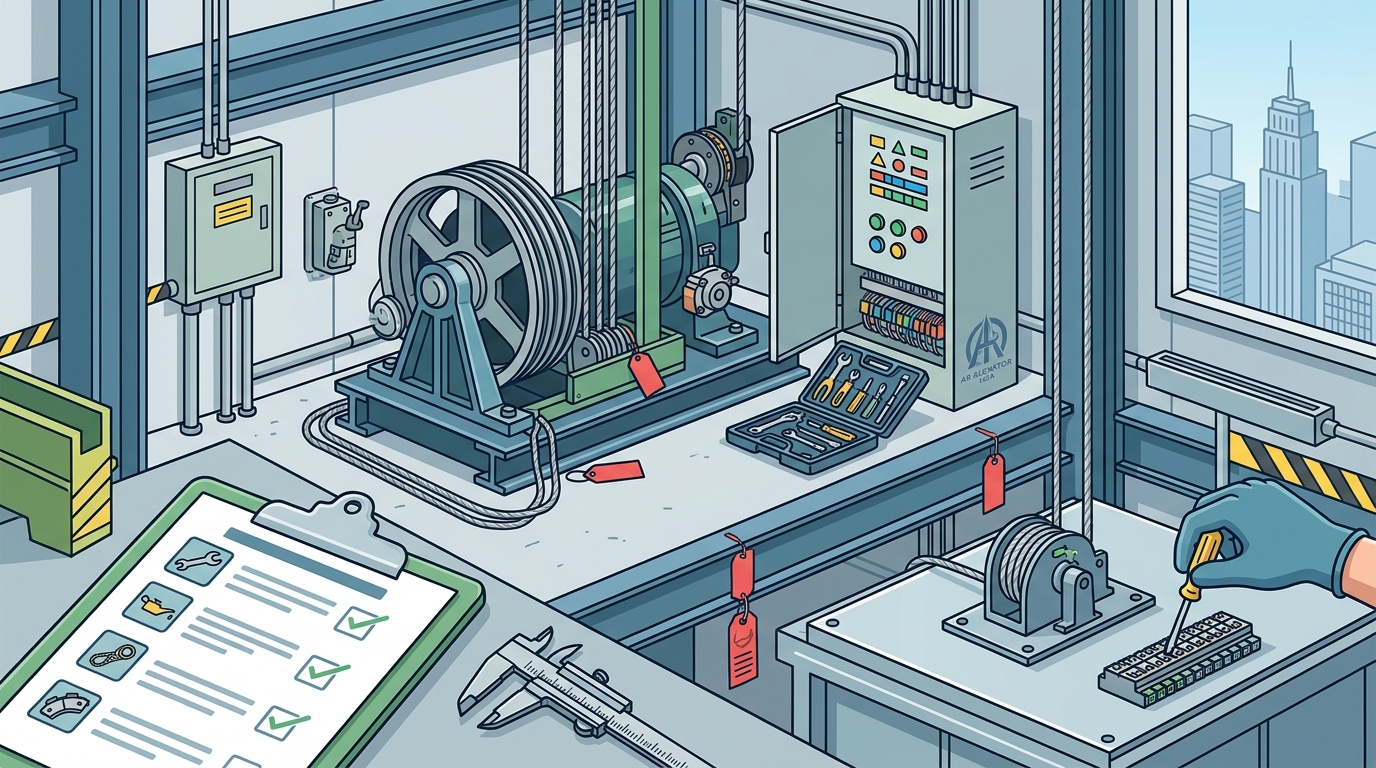
Every moving part, from guide rails to sheaves, requires specific lubrication schedules. Over-lubrication can attract debris, while under-lubrication causes premature wear. Technicians must use manufacturer-specified lubricants to maintain optimal friction coefficients.
2. Electrical System Diagnostics
Modern elevators rely on complex control systems. Criteria for electrical maintenance include testing contactors, relays, and circuit boards for wear and arcing. NFPA 70B standards recommend regular thermographic imaging to detect hot spots in electrical panels before they cause failures.
3. Door Operator Functionality
Door operators are the most frequently used component and the most common source of complaints. Maintenance criteria include testing the force of the door closure, the sensitivity of the safety edge, and the timing of the door open/close cycles. Misaligned doors are a leading cause of elevator entrapments.
Annual Inspection and Deficiency Repair Processes
Annual inspections are mandatory for all commercial and residential elevators. These inspections are conducted by certified technicians who evaluate the system against current safety codes. The process involves:
- Category 1 Inspection: A comprehensive annual inspection covering all safety devices and operational functions.
- Category 5 Inspection: A more detailed inspection required every five years, which includes disassembly of certain components for closer examination.
When deficiencies are identified, they must be repaired within a specific timeframe to avoid work permit expiration. Annual Inspection Deficiency Repair Services are critical to maintaining compliance. AR Elevator USA specializes in clearing these deficiencies promptly, ensuring that your building remains legal and safe.
Ignoring deficiency reports can lead to forced shutdowns by local authorities. Proactive repair planning is the only way to avoid operational disruptions.
Modernization and IoT Integration for Safety
As elevator technology evolves, so do safety standards. Modernization is not just about aesthetics; it is about enhancing safety through technology. Giga Lift Smart IoT Elevator Services utilize Internet of Things (IoT) connectivity to provide real-time monitoring of elevator health.
IoT sensors can detect anomalies in vibration, temperature, and motor performance before they lead to a breakdown. This predictive maintenance approach allows facility managers to address issues during scheduled maintenance windows rather than during emergency entrapments. According to industry data, predictive maintenance can reduce emergency call-outs by over 40%.
Modernization also includes upgrading to energy-efficient drives and regenerative power systems. These upgrades not only improve safety but also reduce the building's carbon footprint. AR Elevator USA Power Efficiency solutions are designed to meet green building standards while enhancing operational reliability.
Nevada Code Compliance and Regulatory Requirements
In Nevada, elevator regulations are enforced at the state level. Building owners must comply with the Nevada Administrative Code (NAC) Chapter 645, which governs elevator safety. This includes specific requirements for:
- Licensing of elevator contractors and inspectors.
- Regular testing of safety devices such as governors and overspeed switches.
- Documentation of all maintenance and repair activities.
AR Elevator USA provides professional Elevator Code Compliance Services to help building owners navigate these complex regulations. Our team ensures that every installation, repair, and modernization project meets or exceeds state and federal standards.
Compliance is not a one-time event but an ongoing process. Regular consultations with certified experts can help identify potential compliance gaps before they become violations.
Key Takeaways
- ASME Codes are Mandatory: Compliance with ASME A17.1 and A17.3 is legally required for all elevator installations and modifications.
- Preventive Maintenance Reduces Downtime: Regular maintenance protocols can reduce elevator downtime by up to 30%.
- Annual Inspections are Critical: Category 1 and Category 5 inspections must be performed by certified technicians to ensure safety.
- IoT Enhances Safety: Smart IoT monitoring allows for predictive maintenance, reducing emergency call-outs by over 40%.
- Nevada Regulations are Strict: NAC Chapter 645 governs elevator safety in Nevada, requiring strict adherence to licensing and testing protocols.
- Deficiency Repairs Must Be Timely: Deficiencies identified during inspections must be repaired before work permit expiration to avoid shutdowns.
- Modernization Improves Efficiency: Upgrading to energy-efficient drives and smart systems enhances both safety and operational cost savings.
Frequently Asked Questions
What are the primary safety standards for elevators?
The primary safety standards are established by the American Society of Mechanical Engineers (ASME). ASME A17.1 covers new installations, while ASME A17.3 covers existing systems. These codes dictate the design, construction, and maintenance requirements to ensure public safety.
How often do elevators need to be inspected?
Elevators typically require an annual inspection (Category 1) and a more comprehensive inspection every five years (Category 5). These inspections must be performed by certified technicians to ensure compliance with local and national codes.
What is the role of IoT in elevator maintenance?
IoT (Internet of Things) technology enables real-time monitoring of elevator components. This allows for predictive maintenance, where potential issues are identified and addressed before they cause a breakdown or entrapment.
What happens if an elevator fails its annual inspection?
If an elevator fails its annual inspection, deficiencies must be repaired within a specified timeframe. Failure to repair these deficiencies can result in the elevator being taken out of service until compliance is achieved.
Why is code compliance important for building owners?
Code compliance ensures the safety of passengers and protects building owners from liability. Non-compliance can result in fines, legal action, and forced shutdowns of elevator systems.
How can I improve the energy efficiency of my elevator?
Energy efficiency can be improved through modernization projects that include regenerative drives, LED lighting, and smart power management systems. These upgrades reduce energy consumption and lower operating costs.
What services does AR Elevator USA offer for compliance?
AR Elevator USA offers comprehensive code compliance services, including annual inspections, deficiency repairs, and modernization consulting. Our team ensures that all systems meet Nevada state regulations and ASME standards.
Contact AR Elevator USA
Ensuring the safety and reliability of your elevator systems requires expert knowledge and proactive maintenance. AR Elevator USA is your trusted partner for all elevator needs in Nevada and the Western region. From new installations to smart modernizations, we deliver code-compliant solutions that prioritize safety and efficiency.
Contact us today to schedule your next inspection or to discuss your modernization options. Visit our Contact Page or call us directly to get started.