
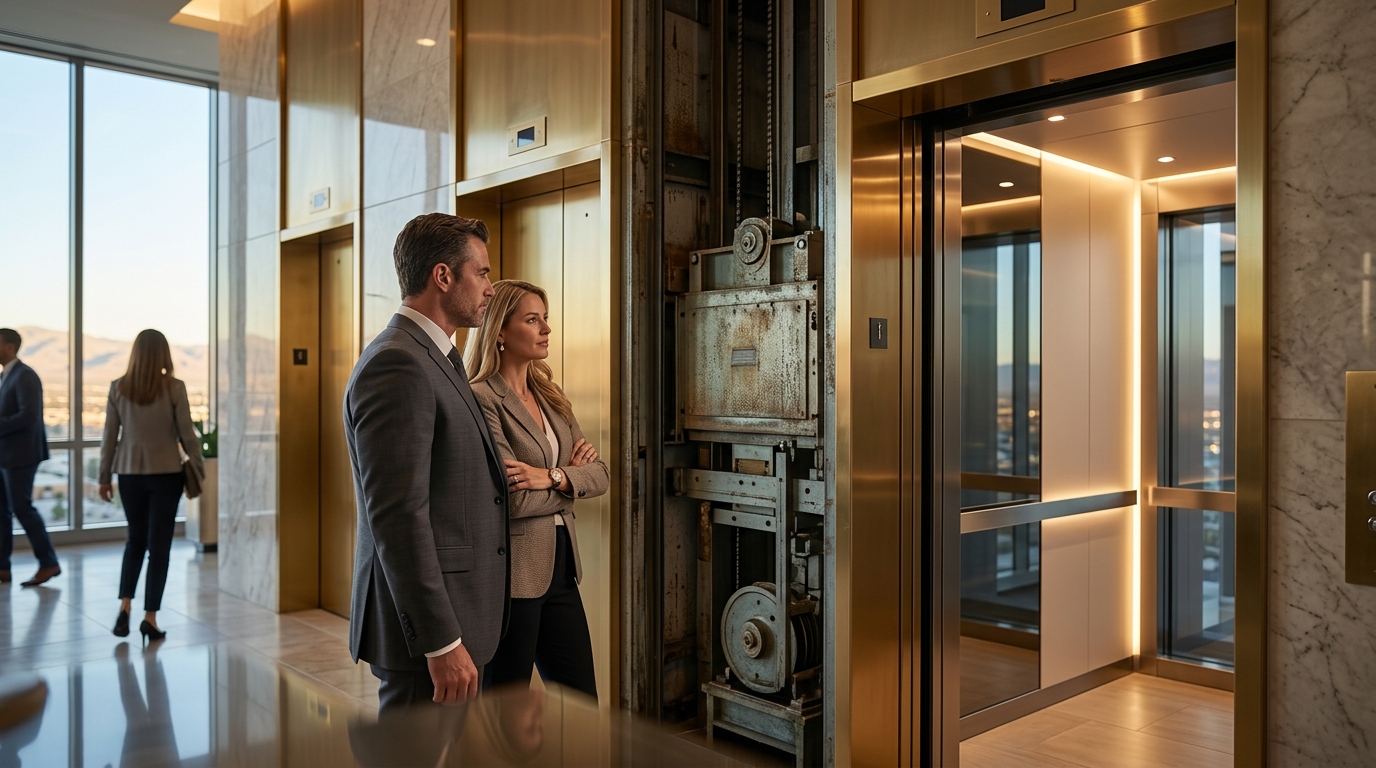
Vertical transportation systems are the heartbeat of any multi-story building, yet they are often the most neglected infrastructure assets. According to industry data, approximately 30% of all elevator breakdowns are caused by aging components that have exceeded their optimal operational lifespan. For property owners in Nevada, this statistic is not just a maintenance metric; it is a direct threat to tenant safety, building valuation, and operational continuity. When an elevator system begins to fail, the decision between modernization and full replacement is rarely simple. It requires a rigorous analysis of mechanical integrity, budget constraints, and strict adherence to Nevada state elevator regulations. This guide provides the definitive framework for making that critical choice, ensuring your building remains safe, efficient, and compliant. (About https arelevatorusa com)
Understanding the Modernization vs. Replacement Decision
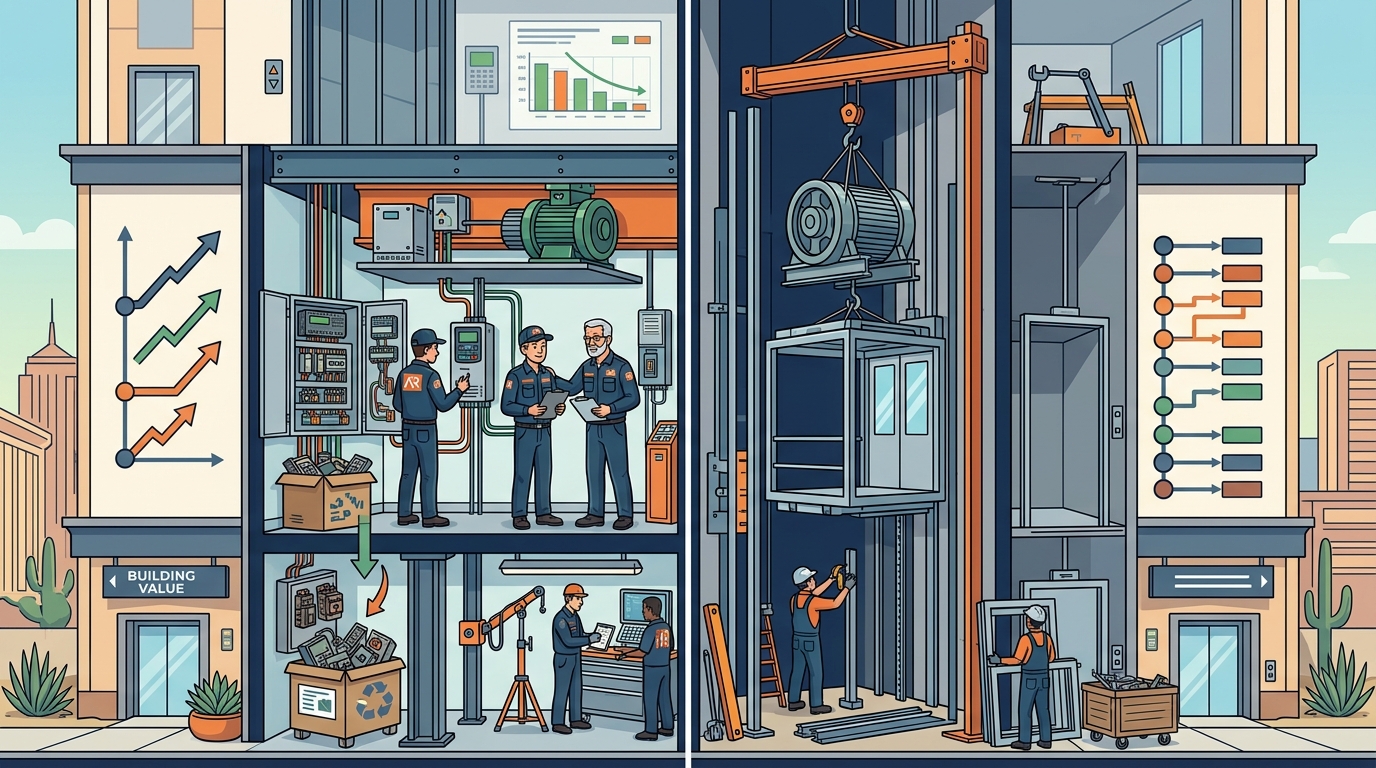
The choice between modernizing an existing elevator system and replacing it entirely is one of the most significant capital decisions a building owner can make. Modernization involves upgrading the core mechanical and electrical components of an elevator while retaining the existing car, cab, and often the shaft infrastructure. This approach is designed to extend the life of the system, improve reliability, and enhance energy efficiency without the massive disruption of a full tear-out.
Conversely, full replacement involves removing the entire existing system and installing a brand-new unit. This is typically reserved for elevators that are beyond repair, structurally compromised, or when the building’s usage patterns have changed so drastically that the old system’s capacity is no longer viable. Understanding the distinction is crucial because the financial and operational implications are vastly different. Modernization is often a strategic investment in longevity, while replacement is a foundational reset of your building’s vertical transport capabilities.
Signs Your Elevator Needs Modernization
Identifying the right moment to modernize requires a keen eye for performance degradation and operational inefficiency. Elevators do not fail overnight; they degrade over time. Recognizing these early warning signs can save property owners hundreds of thousands of dollars in emergency repairs and tenant liability claims.
1. Frequent Breakdowns and Entrapments
If your elevator is experiencing more than two breakdowns per month, it is a clear indicator that the system is struggling. Frequent entrapments not only disrupt business operations but also expose owners to significant legal liability. A modernization program can replace the aging control systems and drive mechanisms that cause these erratic behaviors, restoring reliability without the cost of a new shaft.
2. Excessive Energy Consumption
Older elevator systems, particularly those with DC motors and outdated controllers, are energy hogs. They consume significantly more power than modern standards require. For commercial buildings in Nevada, where cooling costs are already high, an inefficient elevator adds a substantial burden to the utility bill. Modernization can integrate regenerative drives and LED lighting, drastically reducing energy usage.
3. Outdated Technology and Parts Obsolescence
Many elevators installed in the 1980s and 1990s rely on proprietary parts that are no longer manufactured. When a component fails, technicians must scavenge parts from other units or wait weeks for custom fabrication. This leads to extended downtime. Modernization replaces these obsolete systems with standardized, readily available components, ensuring rapid repair times and long-term support.
4. Poor Ride Quality and Noise
Jerky starts, stops, and excessive noise are not just annoyances; they are signs of mechanical wear in the guide rails, ropes, and suspension systems. Tenants and visitors notice these issues immediately, and they negatively impact the perceived value of the property. A modernization project can address these comfort issues by upgrading the suspension and leveling systems.
When Full Replacement is the Only Option
While modernization is a powerful tool, it is not a cure-all. There are specific scenarios where replacement is the only viable path forward. Ignoring these signs can lead to catastrophic failures and exorbitant costs.
1. Structural Shaft Damage
If the elevator shaft itself has suffered from water damage, seismic activity, or structural settling, modernization is impossible. The foundation of the elevator must be sound. If the guide rails cannot be properly aligned or the pit is compromised, a new system must be installed to ensure safety.
2. Capacity and Speed Limitations
As buildings evolve, so do their traffic patterns. A residential tower built in the 1970s may have elevators that are too slow or have too small a car capacity to handle modern density. If the building’s usage has shifted from light residential to high-traffic commercial, the existing infrastructure may simply be physically incapable of meeting the demand, regardless of how new the components are.
3. End-of-Life Mechanical Components
Some mechanical components, such as the traction machine or the main frame, have a finite lifespan. If these core elements are corroded or fatigued, they cannot be modernized. In these cases, the cost of replacing the core structure often approaches the cost of a new elevator, making replacement the more logical financial decision.
The Impact of Nevada Code Compliance
For property owners in Nevada, regulatory compliance is not optional. The state has strict elevator safety codes that must be adhered to, and failure to comply can result in heavy fines, forced shutdowns, and legal action. AR Elevator USA specializes in navigating these complex regulations, ensuring that every project meets or exceeds state requirements.
ASME A17.1 Standards
The American Society of Mechanical Engineers (ASME) A17.1 code is the national standard for elevator safety. Nevada adopts and enforces these standards with local amendments. Modernization projects must ensure that all new components are ASME compliant. This includes safety brakes, door operators, and emergency communication systems. A modernization that does not bring the system up to current code is not a true modernization.
Nevada State Regulations
Nevada has specific licensing and inspection requirements that differ from other states. Elevator contractors must be licensed by the state, and annual inspections are mandatory. During these inspections, deficiencies are identified and must be repaired within a specific timeframe. If a building has multiple code violations, the state may require a full replacement rather than allowing piecemeal repairs. Understanding these local nuances is critical for avoiding costly delays.
Cost-Benefit Analysis: Modernization vs. Replacement
Financial planning is the cornerstone of any elevator project. While modernization is generally less expensive than replacement, the long-term value proposition depends on the condition of the existing infrastructure. The table below provides a comparative overview of the two options.
| Factor | Elevator Modernization | Full Replacement |
|---|---|---|
| Upfront Cost | Lower (60-70% of replacement cost) | Higher (Full material and labor cost) |
| Installation Time | Faster (Less demolition required) | Slower (Requires shaft preparation) |
| Disruption to Tenants | Minimal to Moderate | Significant (Elevator out of service for weeks) |
| Energy Efficiency | Improved (Up to 30% savings) | Maximum (Newest technology available) |
| Lifespan Extension | 10-15 years | 20-30 years |
| Warranty Coverage | Limited on old mechanical parts | Full coverage on all components |
Modernization is often the preferred choice for buildings with good shaft integrity but outdated controls. It offers a high return on investment by extending the life of the asset while improving performance. Replacement is justified when the building’s needs have outgrown the physical constraints of the current system or when the cost of maintaining the old infrastructure exceeds the cost of a new install.
The Role of IoT and Smart Technology
The future of elevator maintenance is here, and it is driven by the Internet of Things (IoT). Smart elevator technology allows for real-time monitoring of elevator performance, predicting failures before they occur. This is a key differentiator in modernization projects.
Predictive Maintenance
Traditional maintenance is reactive or scheduled. Predictive maintenance is data-driven. Sensors installed on the elevator monitor vibration, temperature, and door cycles. This data is transmitted to a cloud platform where AI algorithms analyze it for anomalies. If a bearing is showing signs of wear, the system alerts the technician to replace it during the next scheduled visit, preventing an unexpected breakdown.
Enhanced Tenant Experience
Smart elevators also improve the user experience. Features like destination dispatch systems reduce wait times by grouping passengers going to the same floors. Real-time tracking apps allow tenants to see exactly where the elevator is and when it will arrive. These features are increasingly expected in modern commercial and residential buildings, adding value to the property.
AR Elevator USA offers Giga Lift Smart IoT Elevator Services that integrate these advanced monitoring capabilities into both new installations and modernization projects. By leveraging AR Elevator USA Power Efficiency solutions, building owners can also achieve significant energy savings while enjoying the benefits of smart technology.
Key Takeaways
- Modernization vs. Replacement: Modernization upgrades components to extend life, while replacement installs a new system for long-term capacity and efficiency.
- Cost Efficiency: Modernization typically costs 60-70% of a full replacement, offering a faster ROI for buildings with sound shaft infrastructure.
- Nevada Compliance: All projects must adhere to ASME A17.1 standards and Nevada state licensing requirements to avoid fines and shutdowns.
- IoT Integration: Smart elevator technology enables predictive maintenance, reducing downtime and enhancing tenant safety.
- Energy Savings: Modernizing drive systems and controllers can reduce elevator energy consumption by up to 30%.
- 24/7 Support: Reliable elevator service requires 24/7 entrapment response and rapid repair capabilities.
- Expert Consultation: A professional inspection is the first step in determining the best path forward for your specific building.
Frequently Asked Questions
How do I know if my elevator needs modernization or replacement?
A professional inspection by a licensed elevator contractor is the only way to know for sure. They will assess the condition of the shaft, the age of the mechanical components, and the building’s current traffic patterns to recommend the most cost-effective solution.
What is the average cost of elevator modernization in Nevada?
The cost varies based on the size and complexity of the elevator, but modernization is generally 60-70% of the cost of a new installation. Factors such as the need for code upgrades and the extent of the control system overhaul will influence the final price.
Does modernization improve elevator safety?
Yes, modernization significantly improves safety by replacing outdated components with current ASME-compliant parts. It also enhances emergency communication systems and door safety mechanisms, reducing the risk of entrapment and accidents.
How long does an elevator modernization project take?
Most modernization projects can be completed in 2-4 weeks, depending on the scope of work and the number of elevators. This is significantly faster than a full replacement, which can take several months.
What are Nevada’s specific elevator code requirements?
Nevada follows the ASME A17.1 safety code with local amendments. These include requirements for annual inspections, licensing of contractors, and specific safety features such as emergency lighting and communication devices. AR Elevator USA ensures full compliance with all state regulations.
Can I add smart technology to an older elevator?
Yes, modernization projects often include the installation of IoT sensors and smart control systems. This allows for real-time monitoring and predictive maintenance, even in older buildings.
What is the lifespan of a modernized elevator?
A properly modernized elevator can last an additional 10-15 years, depending on usage and maintenance. Regular preventive maintenance is crucial to maximizing this lifespan.
Contact AR Elevator USA
Choosing between modernization and replacement is a critical decision that impacts the safety, value, and efficiency of your building. AR Elevator USA is Nevada’s leading partner for elevator modernization, offering expert consultation, code compliance services, and smart IoT integration. We provide transparent pricing and 24/7 responsive support to ensure your vertical transportation systems operate flawlessly.
Do not wait for a breakdown to make a decision. Contact us today to schedule a comprehensive inspection and receive a detailed proposal tailored to your building’s unique needs. Visit our Contact Page or call us directly to discuss your project. Let AR Elevator USA help you build a safer, more efficient future for your property.