
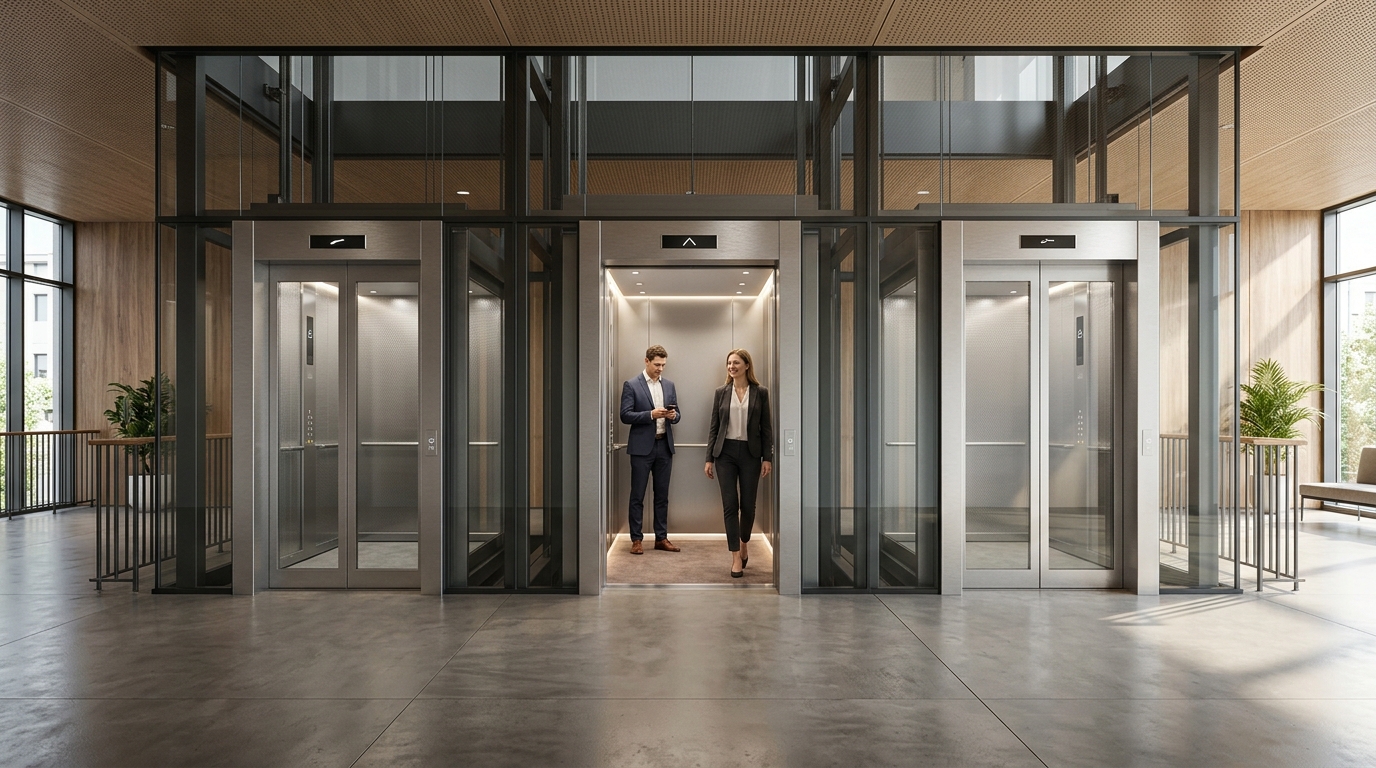
Vertical transportation is a critical infrastructure component for any multi-story commercial building, yet it is often an afterthought during the initial design phase. According to recent industry data, elevator systems account for approximately 7% of a building's total energy consumption, making the selection of the right technology a direct impact on operational overhead. This guide analyzes the primary commercial elevator types, their installation costs, and the specific use cases where each system excels. By understanding the mechanical differences between hydraulic, traction, and machine-room-less (MRL) systems, building owners and facility managers can make informed decisions that balance upfront capital expenditure with long-term maintenance efficiency. (About https arelevatorusa com)
Hydraulic Elevators: Cost and Performance
Hydraulic elevators remain a popular choice for low-rise commercial buildings, typically those under six stories. These systems operate using a piston and cylinder mechanism that pushes the elevator car upward from below the shaft floor. This mechanical simplicity makes them highly reliable and relatively inexpensive to install compared to more complex systems. (Elevator Annual Inspection amp)
How Hydraulic Systems Work
A hydraulic elevator is a vertical transportation device that uses a hydraulic fluid, usually oil, to raise and lower the car. The pump forces fluid into a cylinder, extending the piston. To descend, the valve opens, allowing the fluid to return to the reservoir, and gravity pulls the car down. This design requires no overhead machine room, which can save valuable architectural space in older structures.
Cost Implications
The initial installation cost for a hydraulic elevator is generally lower than that of a traction system. However, the long-term operational costs can be higher due to energy consumption. Hydraulic pumps must work continuously to maintain pressure, leading to significant electricity usage. Additionally, the potential for hydraulic fluid leaks poses environmental and maintenance challenges that require regular professional inspection.
For building owners in Nevada and the Western region, understanding the local climate's impact on hydraulic fluid viscosity is crucial. AR Elevator USA provides comprehensive preventive maintenance services tailored to these specific environmental factors, ensuring consistent performance year-round.
Traction Elevators: Speed and Efficiency
Traction elevators are the standard for mid-to-high-rise commercial buildings. They use steel ropes or belts to move the car along guide rails, powered by an electric motor. This system is known for its speed, smoothness, and energy efficiency, making it ideal for busy office towers, hotels, and hospitals.
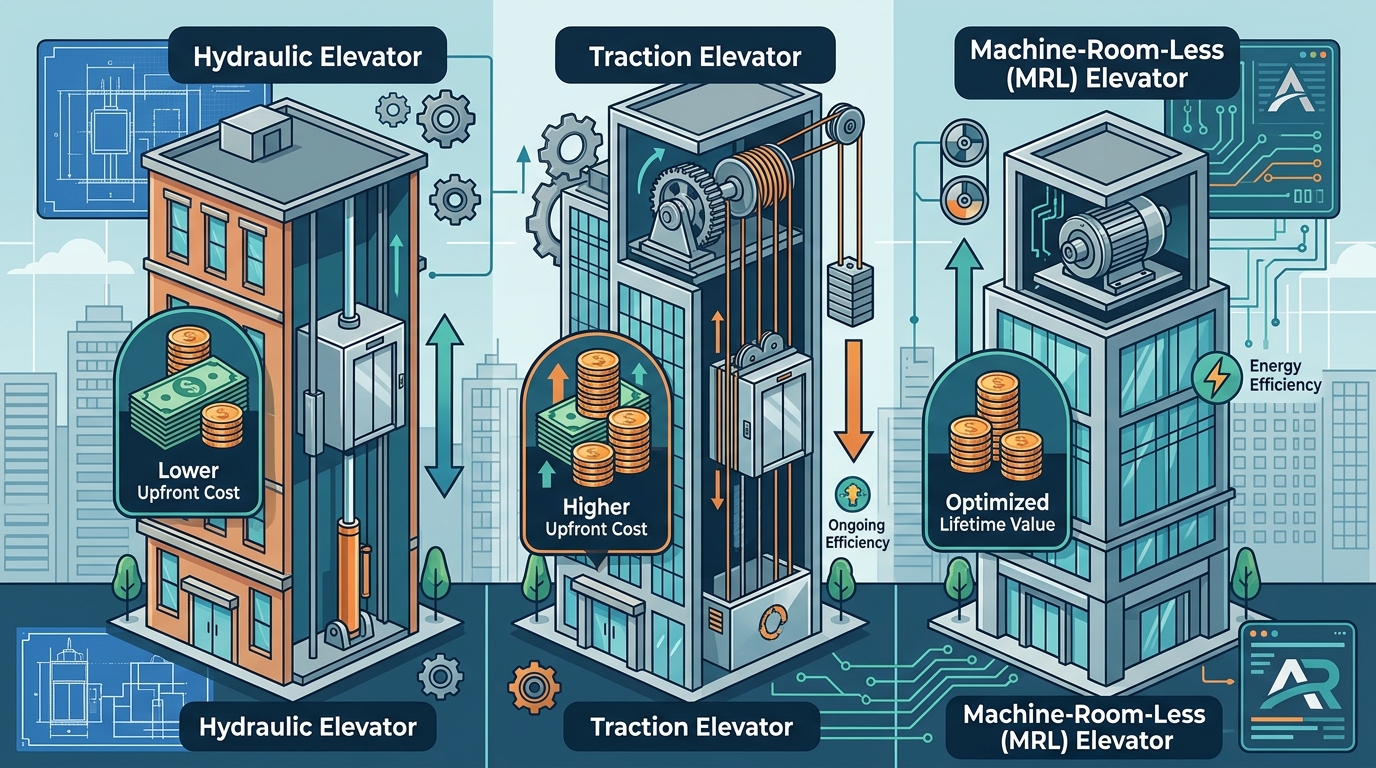
Machine-Room vs. Machine-Room-Less
Traditional traction elevators require a dedicated machine room at the top of the shaft to house the motor and control equipment. This adds to the construction cost and requires precise architectural planning. In contrast, modern machine-room-less (MRL) elevators place the motor and controller inside the hoistway, eliminating the need for a separate room. This innovation reduces construction costs and allows for more flexible building designs.
Energy Efficiency and Maintenance
Traction elevators are significantly more energy-efficient than hydraulic systems. Many modern models feature regenerative drives that convert the energy generated during braking into electricity, which can be fed back into the building's power grid. This technology can reduce energy consumption by up to 75% compared to traditional systems. Regular maintenance is essential to keep the steel ropes and guide rails in optimal condition, preventing wear and ensuring passenger safety.
Ensuring your elevator meets current safety standards is non-negotiable. Annual inspection and testing services are critical for maintaining compliance with ASME A17.1, A17.2, and A17.3 standards, which govern elevator safety in the United States.
Machine-Room-Less (MRL) Systems
Machine-room-less (MRL) elevators represent a significant advancement in vertical transportation technology. By integrating the drive machine and controller into the hoistway, MRL systems offer a compact, efficient, and cost-effective solution for modern commercial buildings.
Advantages of MRL Technology
The primary advantage of MRL elevators is the elimination of the machine room, which reduces construction costs and allows for more efficient use of building space. These systems are also quieter and more energy-efficient than traditional traction elevators. The compact design makes them suitable for a wide range of applications, from small commercial buildings to large high-rises.
Smart IoT Integration
Modern MRL elevators are often equipped with smart IoT technology, enabling real-time monitoring and predictive maintenance. This technology allows service providers to detect potential issues before they cause downtime, ensuring maximum uptime and passenger safety. Giga Lift Smart IoT Elevator Services from AR Elevator USA leverage this technology to provide intelligent elevator solutions that enhance building efficiency and reduce operational costs.
For building owners looking to upgrade their existing systems, elevator modernization and upgrading services can transform aging equipment into smart, efficient systems that meet current code requirements.
Cost and Feature Comparison
Choosing the right elevator type involves balancing upfront costs with long-term operational efficiency. The following table compares the key features and cost factors of the most common commercial elevator types.
| Elevator Type | Best For | Upfront Cost | Energy Efficiency | Maintenance Complexity |
|---|---|---|---|---|
| Hydraulic | Low-rise (1-6 stories) | Low | Low | Moderate |
| Traction | Mid-to-high-rise | High | High | Moderate |
| MRL | Mid-rise, space-constrained | Moderate | Very High | Low |
| Platform Lift | Accessibility compliance | Low | High | Low |
Understanding these differences is crucial for making an informed decision. Platform lift and VRC services offer specialized solutions for accessibility and freight transport, ensuring compliance with ADA requirements and operational needs.
Modernization and IoT Integration
As buildings age, their elevator systems may become outdated, inefficient, or non-compliant with current safety codes. Modernization can extend the life of an elevator system, improve energy efficiency, and enhance passenger experience. AR Elevator USA specializes in elevator modernization, alteration, and upgrading services that transform aging systems into smart, efficient solutions.
Code Compliance and Safety
Nevada has specific elevator regulations that building owners must adhere to. Elevator code compliance services ensure that your system meets all state and federal safety standards, protecting your building from liability and ensuring passenger safety. Regular inspections and deficiency repairs are essential to maintaining compliance.
Power Efficiency and Sustainability
Energy-efficient elevators are a key component of green building initiatives. AR Elevator USA Power Efficiency solutions focus on reducing energy consumption through advanced motor technologies, regenerative drives, and smart control systems. These solutions not only lower utility bills but also contribute to a building's sustainability goals.
Key Takeaways
- Hydraulic elevators are cost-effective for low-rise buildings but have higher energy costs.
- Traction elevators are ideal for mid-to-high-rise buildings due to their speed and efficiency.
- MRL elevators offer a compact, energy-efficient alternative to traditional traction systems.
- Smart IoT technology enables predictive maintenance, reducing downtime and extending equipment life.
- Regular inspections and code compliance are essential for safety and legal adherence.
- Modernization can significantly improve energy efficiency and passenger experience.
- AR Elevator USA provides comprehensive services for all elevator types, including installation, maintenance, and modernization.
Frequently Asked Questions
What is the average cost to install a commercial elevator?
The cost varies widely based on the type of elevator, building height, and customization. Hydraulic elevators typically range from $35,000 to $60,000, while traction elevators can cost between $80,000 and $150,000 or more. MRL elevators often fall in the middle, offering a balance of cost and efficiency.
How often do commercial elevators need to be inspected?
Commercial elevators must undergo annual inspections to ensure compliance with safety codes. Additionally, regular preventive maintenance is recommended to keep the system running smoothly and safely.
What is the difference between a hydraulic and a traction elevator?
A hydraulic elevator uses a piston and fluid to move the car, while a traction elevator uses steel ropes and an electric motor. Hydraulic systems are generally slower and better for low-rise buildings, while traction systems are faster and more efficient for taller buildings.
Can I upgrade my existing elevator to be more energy-efficient?
Yes, modernization can significantly improve energy efficiency. Upgrades may include installing regenerative drives, LED lighting, and smart control systems. AR Elevator USA offers comprehensive modernization services to help you achieve these goals.
What are the benefits of IoT-enabled elevators?
IoT-enabled elevators provide real-time monitoring, predictive maintenance, and enhanced passenger experience. They can detect potential issues before they cause downtime, ensuring maximum uptime and safety.
How do I choose the right elevator for my building?
Consider factors such as building height, traffic patterns, budget, and energy efficiency goals. Consulting with a professional elevator service provider can help you make an informed decision.
What is the role of AR Elevator USA in elevator maintenance?
AR Elevator USA provides 24/7 emergency response, preventive maintenance, and code compliance services for commercial and residential elevators. Our team of certified technicians ensures your system operates safely and efficiently.
Contact AR Elevator USA
Choosing the right elevator system is a critical decision that impacts your building's efficiency, safety, and value. AR Elevator USA is your trusted partner for all elevator needs, from new installations to modernization and maintenance. We serve Nevada and the Western region with licensed, full-service elevator solutions.
Contact us today to schedule a consultation and discover how we can help you find the perfect elevator solution for your building. Visit our contact page or call us at 702-810-2757 to get started.