
Vertical transportation systems are the backbone of commercial and residential infrastructure, yet aging equipment poses significant risks to safety and operational efficiency. According to industry data, elevator modernization can reduce energy consumption by up to 50% while extending the lifespan of the machinery by decades. This guide details the strategic process of upgrading your system to meet current safety codes and smart building standards. (About https arelevatorusa com)
Understanding Elevator Modernization
Elevator modernization is the systematic replacement of obsolete components with new, code-compliant technology. It is not merely a repair but a complete overhaul of the control systems, safety mechanisms, and often the mechanical drive. Modernization addresses the critical issue of parts obsolescence, where manufacturers no longer support older models, leading to prolonged downtime during repairs.
The process transforms aging infrastructure into a reliable, energy-efficient asset. For building owners in Nevada and the Western region, this upgrade is essential for maintaining property value and ensuring passenger safety. The goal is to achieve seamless vertical transportation that aligns with contemporary architectural and technological expectations.
Phase 1: Comprehensive System Assessment
The first step in any modernization project is a rigorous diagnostic evaluation. This phase determines the scope of work required to bring the elevator up to current standards.
Identifying Obsolete Components
Technicians inspect the control cabinet, motor, and safety circuits for components that are no longer manufactured. Identifying these obsolete parts early prevents budget overruns during the installation phase. A detailed audit reveals which parts can be refurbished and which must be replaced entirely.
Evaluating Mechanical Integrity
Beyond electronics, the mechanical structure must be assessed. This includes the condition of the rails, cables, and guide shoes. If the mechanical framework is compromised, the modernization may require structural reinforcements to support new, heavier, or more powerful equipment.
Phase 2: Core Technology Upgrades
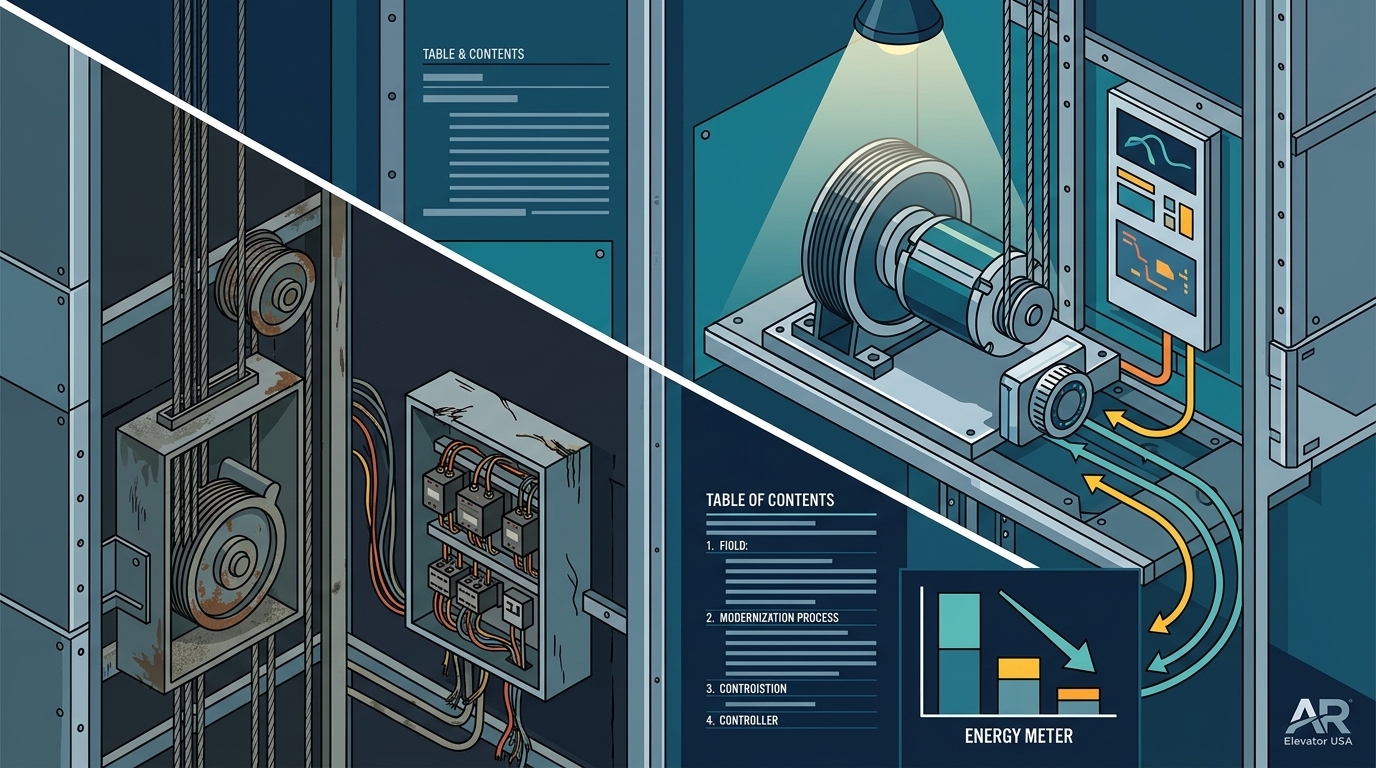
Modernization typically involves upgrading the control system and the drive mechanism. These upgrades are the primary drivers of improved performance and energy savings.
Control System Replacement
The brain of the elevator is its control system. Upgrading to a microprocessor-based controller allows for smarter traffic management, faster response times, and predictive maintenance capabilities. This upgrade is critical for reducing wait times and improving the overall rider experience.
Drive System Modernization
Older DC drives are inefficient and prone to failure. Modernizing to a Variable Voltage Variable Frequency (VVVF) drive or a machine-room-less (MRL) system significantly reduces energy usage. These systems provide smoother acceleration and deceleration, enhancing comfort for passengers.
Phase 3: Regulatory Compliance and Safety
2Compliance with safety codes is non-negotiable in elevator modernization. Building owners must ensure that all upgrades meet the latest local and national standards.
ASME A17.1 Standards
The American Society of Mechanical Engineers (ASME) sets the national safety code for elevators. Modernization must adhere to ASME A17.1, which dictates requirements for safety devices, electrical systems, and structural integrity. Failure to comply can result in severe legal liabilities and operational shutdowns.
Nevada State Regulations
In Nevada, specific state regulations add layers of complexity to elevator maintenance and inspection. AR Elevator USA specializes in navigating these local requirements, ensuring that every modernization project passes rigorous state inspections. This includes compliance with MCS 2301 requirements for specific safety protocols.
Phase 4: IoT and Smart Building Integration
Modern elevators are no longer isolated mechanical boxes; they are connected nodes in a smart building ecosystem. Integrating Internet of Things (IoT) technology is a key component of contemporary modernization.
Predictive Maintenance
IoT sensors monitor vibration, temperature, and performance metrics in real-time. This data allows for predictive maintenance, where issues are identified and resolved before they cause a breakdown. This approach minimizes downtime and extends the life of the equipment.
Real-Time Monitoring
Building managers can monitor elevator status remotely through dashboards. This visibility provides immediate alerts for any anomalies, allowing for rapid response to potential issues. It also provides valuable data for optimizing traffic flow during peak hours.
Cost-Benefit Analysis and ROI
While modernization requires a significant upfront investment, the long-term financial benefits are substantial. The return on investment (ROI) is driven by energy savings, reduced maintenance costs, and increased property value.
Energy Savings
Modern drives and lighting systems can reduce energy consumption by up to 50%. For large commercial buildings, these savings accumulate rapidly, often paying for a portion of the modernization cost within a few years.
Increased Property Value
Up-to-date elevators are a major selling point for commercial and residential properties. They signal to tenants and buyers that the building is well-maintained and safe. This can lead to higher occupancy rates and increased rental or sale prices.
Reduced Maintenance Costs
Newer systems are more reliable and require less frequent intervention. The shift from reactive repairs to predictive maintenance reduces the total cost of ownership over the life of the elevator.
Key Takeaways
- Modernization extends lifespan: Upgrading obsolete components can extend the operational life of an elevator system by decades.
- Energy efficiency: VVVF drives and LED lighting can reduce energy consumption by up to 50%.
- Safety compliance: Adherence to ASME A17.1 and Nevada state regulations is mandatory for legal operation.
- IoT integration: Smart technology enables predictive maintenance, reducing unexpected downtime.
- ROI potential: The combination of energy savings and increased property value often yields a strong return on investment.
- Local expertise: Working with a local provider like AR Elevator USA ensures compliance with regional codes and climate challenges.
- 24/7 support: Modern systems require responsive support, which AR Elevator USA provides with a 1-hour response guarantee.
Frequently Asked Questions
What is the difference between modernization and repair?
Repair addresses specific broken components, while modernization replaces obsolete systems with new technology to improve performance, safety, and efficiency. Modernization is a comprehensive upgrade rather than a temporary fix.
How long does an elevator modernization project take?
The timeline varies based on the scope of work, but most commercial modernizations take between 4 to 8 weeks. Residential projects may be completed more quickly. AR Elevator USA works to minimize downtime during this period.
Do I need to upgrade my elevator for Nevada’s new MCS 2301 requirements?
Yes, compliance with Nevada’s specific safety codes, including MCS 2301, is essential. Modernization ensures that your elevator meets these current regulatory standards, avoiding legal penalties and ensuring passenger safety.
What is Giga Lift Smart IoT Elevator Service?
Giga Lift is AR Elevator USA’s proprietary IoT solution that provides intelligent elevator management. It includes real-time monitoring, predictive maintenance alerts, and smart building integration to optimize elevator performance.
Can modernization improve elevator speed and capacity?
Yes, upgrading the control system and drive mechanism can significantly improve acceleration, deceleration, and overall travel speed. It can also optimize traffic flow to handle higher passenger volumes efficiently.
What is the average cost of elevator modernization?
Costs vary widely based on the type of elevator and the scope of upgrades. However, the long-term savings in energy and maintenance often offset the initial investment. AR Elevator USA provides transparent, upfront pricing for all projects.
How does predictive maintenance work?
Predictive maintenance uses IoT sensors to monitor elevator performance in real-time. Data analytics identify potential issues before they cause failures, allowing for proactive repairs that prevent downtime.
Ready to Modernize Your Elevator System?
Do not let aging equipment compromise your building’s safety and efficiency. AR Elevator USA offers expert modernization services tailored to your specific needs. Contact us today to schedule a comprehensive assessment and receive a transparent quote for your project.
Contact AR Elevator USA to begin your modernization journey.