
Vertical transportation systems are the heartbeat of any multi-story building, yet they rarely receive attention until they fail. For property managers and building owners in Nevada, the decision to intervene is critical. Modernization involves upgrading internal components to extend the life of the existing system, while replacement involves installing a completely new unit. According to industry data, elevator modernization can extend the operational lifespan of a lift by 15 to 20 years, offering a significantly lower upfront cost than full replacement. However, the long-term return on investment depends heavily on the age of the car, the frequency of breakdowns, and the specific technological goals of the building. (About https arelevatorusa com)
Why the Decision Matters
Elevators are complex mechanical and electrical systems that degrade over time. In regions with extreme climates, such as the Nevada desert, environmental factors can accelerate wear on control panels and mechanical parts. When an elevator begins to show signs of aging, owners face a binary choice: repair and upgrade the existing infrastructure or tear it out and start fresh. This decision impacts tenant satisfaction, building valuation, and operational budgets. (Elevator Annual Inspection amp)
Choosing the wrong path can lead to wasted capital. Over-investing in a system that is near the end of its structural life is financially inefficient. Conversely, delaying necessary upgrades can result in frequent entrapments, code violations, and higher emergency repair costs. Understanding the technical and financial distinctions between modernization and replacement is essential for making a data-driven decision. (Elevator Code Compliance Services)
Modernization Benefits
Elevator modernization is the process of replacing outdated components with new technology while retaining the existing car, cab, and often the shaft infrastructure. This approach is ideal for buildings where the physical structure is sound, but the technology is obsolete. (Annual Inspection Deficiency Repair)
Cost Efficiency
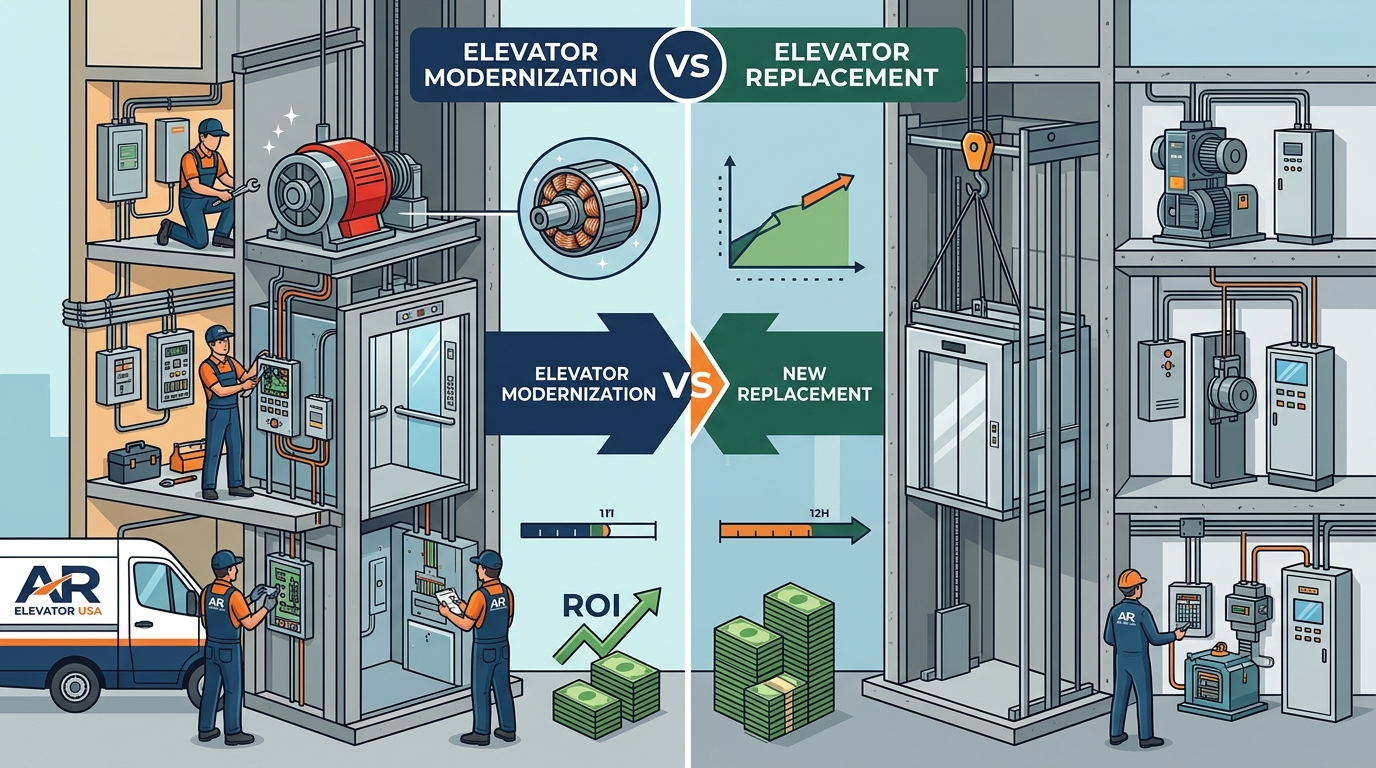
The primary advantage of modernization is cost. By reusing the existing car and cab, you avoid the high material and labor costs associated with manufacturing and installing a new shell. Modernization typically costs 40% to 60% less than a full replacement. This makes it an attractive option for budget-conscious property managers who need to improve reliability without a massive capital expenditure.
Reduced Downtime
Modernization projects are generally faster to execute than full replacements. Since the structural work in the shaft is minimal, the installation phase is shorter. This reduces the period during which the elevator is out of service, minimizing disruption to tenants and maintaining building accessibility. For commercial buildings, this reduced downtime is crucial for maintaining lease agreements and tenant satisfaction.
Energy Savings
Older elevator systems are often energy inefficient. Modernization allows for the installation of variable frequency drives (VFDs), regenerative drives, and LED lighting systems. These upgrades can reduce energy consumption by up to 30%, leading to lower utility bills and a smaller carbon footprint. This aligns with green building standards and can contribute to LEED certification points.
Replacement Benefits
Full elevator replacement involves removing the old system entirely and installing a new one from the ground up. This includes a new car, cab, doors, and often new machinery in the machine room or machine-room-less (MRL) setup.
Complete Reliability
When an elevator is over 20 years old, the underlying mechanical components may be too worn to be reliably upgraded. Replacement eliminates the risk of recurring issues with the car frame, guide rails, and hoistway doors. A new system comes with a full manufacturer warranty, providing peace of mind and predictable maintenance costs for the next 15 to 20 years.
Modern Aesthetics & Capacity
Replacement allows for a complete redesign of the elevator experience. Owners can choose new door operators, custom interiors, and advanced control systems that match the building's current aesthetic. Furthermore, replacement offers the opportunity to increase passenger capacity or change the car dimensions to meet modern accessibility standards, such as ADA compliance, which older systems may not fully support.
Advanced Technology Integration
New elevators come equipped with the latest safety features and smart technologies. This includes IoT connectivity for predictive maintenance, real-time monitoring, and integration with building management systems. These features allow for proactive repairs before breakdowns occur, significantly reducing emergency service calls and extending the overall life of the equipment.
Cost & Timeline Comparison
Understanding the financial and temporal implications of each option is critical for budgeting. The following table summarizes the key differences.
| Factor | Modernization | Full Replacement |
|---|---|---|
| Upfront Cost | Lower (40-60% of replacement) | Higher (Full material & labor) |
| Project Timeline | Shorter (2-4 weeks typical) | Longer (4-8 weeks typical) |
| Warranty Coverage | Limited (Components only) | Comprehensive (Full system) |
| Energy Efficiency | Improved (30% savings) | Maximum (Newest tech) |
| Best For | Structurally sound shafts, older tech | End-of-life systems, aesthetic upgrades |
While modernization offers a lower initial price tag, the long-term value must be calculated based on the remaining life of the car and cab. If these components are damaged or outdated, replacement may offer a better total cost of ownership over a 10-year period.
IoT & Smart Technology
Both modernization and replacement can incorporate Internet of Things (IoT) technology, but the depth of integration varies. Modernization packages often include smart monitoring kits that attach to existing controllers. These kits provide real-time data on ride quality, door cycles, and energy usage.
For buildings seeking the highest level of connectivity, Giga Lift Smart IoT Elevator Services offer advanced predictive maintenance capabilities. This technology uses AI to analyze vibration and performance data, predicting failures before they happen. This is particularly valuable in Nevada, where extreme heat can stress electrical components, making proactive monitoring essential for maintaining uptime.
Full replacement systems natively support the latest IoT protocols, allowing for seamless integration with building automation systems. This enables features like keyless entry, destination dispatch, and automated maintenance scheduling, enhancing both security and convenience for tenants.
Key Takeaways
- Cost Difference: Modernization typically costs 40% to 60% less than full replacement, making it a budget-friendly option for structurally sound buildings.
- Lifespan Extension: Proper modernization can extend an elevator's operational life by 15 to 20 years, delaying the need for a full capital replacement.
- Energy Efficiency: Upgrading to variable frequency drives and regenerative technology can reduce energy consumption by up to 30%.
- Downtime: Modernization projects are generally faster, with typical completion times of 2 to 4 weeks compared to 4 to 8 weeks for replacement.
- Warranty: Full replacement provides a comprehensive warranty on the entire system, whereas modernization warranties often cover only new components.
- IoT Integration: Both options support smart technology, but new installations offer deeper native integration with building management systems.
- Code Compliance: Modernization ensures compliance with current safety codes, such as ASME A17.1, without the need for major structural changes.
Frequently Asked Questions
How do I know if my elevator needs modernization or replacement?
If the elevator car and cab are in good condition and the building's layout supports the existing shaft, modernization is usually the best choice. If the car is damaged, the technology is obsolete, or you want to increase capacity, replacement is recommended.
What is the average cost of elevator modernization?
Modernization costs vary based on the scope of work, but they are generally 40% to 60% of the cost of a full replacement. This includes new controllers, doors, and lighting systems.
Can modernization improve energy efficiency?
Yes. Modernization often includes installing variable frequency drives (VFDs) and regenerative drives, which can reduce energy usage by up to 30%.
How long does an elevator modernization project take?
Most modernization projects are completed within 2 to 4 weeks, depending on the complexity and the availability of parts. This is significantly faster than full replacement.
Does modernization include IoT connectivity?
Yes. Modernization packages can include IoT monitoring kits that provide real-time data on elevator performance, enabling predictive maintenance and reducing downtime.
What are the benefits of full elevator replacement?
Replacement offers a brand-new system with a full warranty, modern aesthetics, increased capacity, and the latest safety and smart technologies. It is ideal for elevators that are near the end of their useful life.
Is modernization code-compliant?
Yes. Modernization ensures that the elevator meets current safety codes, including ASME A17.1 and Nevada state regulations, without the need for major structural modifications.
Contact AR Elevator USA
Choosing between modernization and replacement requires expert assessment. AR Elevator USA provides comprehensive evaluations to help you make the best decision for your building. As a licensed, full-service partner in Nevada, we offer transparent pricing and 24/7 responsive support. Contact us today to schedule your elevator inspection and discuss your options.