
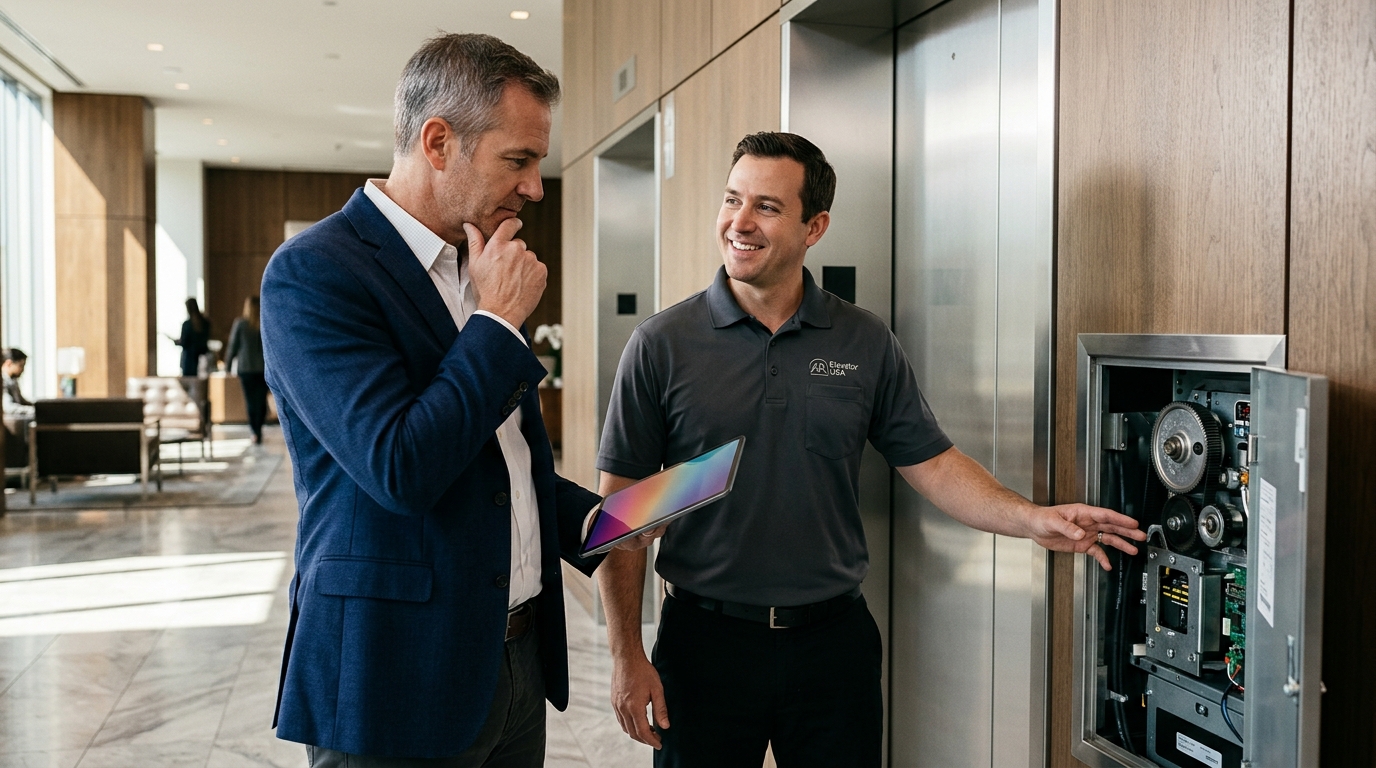
Vertical transportation systems are the backbone of any multi-story building, yet they are often the most neglected infrastructure asset. According to the American Society of Mechanical Engineers (ASME), elevator failures account for a significant portion of building maintenance costs, with older systems requiring up to 40% more energy than modern equivalents. For property owners in Nevada and the Western region, the decision to either modernize an existing elevator or replace it entirely is rarely straightforward. It requires a deep analysis of mechanical age, regulatory compliance, and long-term operational efficiency. This guide breaks down the critical differences between elevator modernization and full replacement to help you make the right financial and operational choice. (About https arelevatorusa com)
Understanding Elevator Modernization
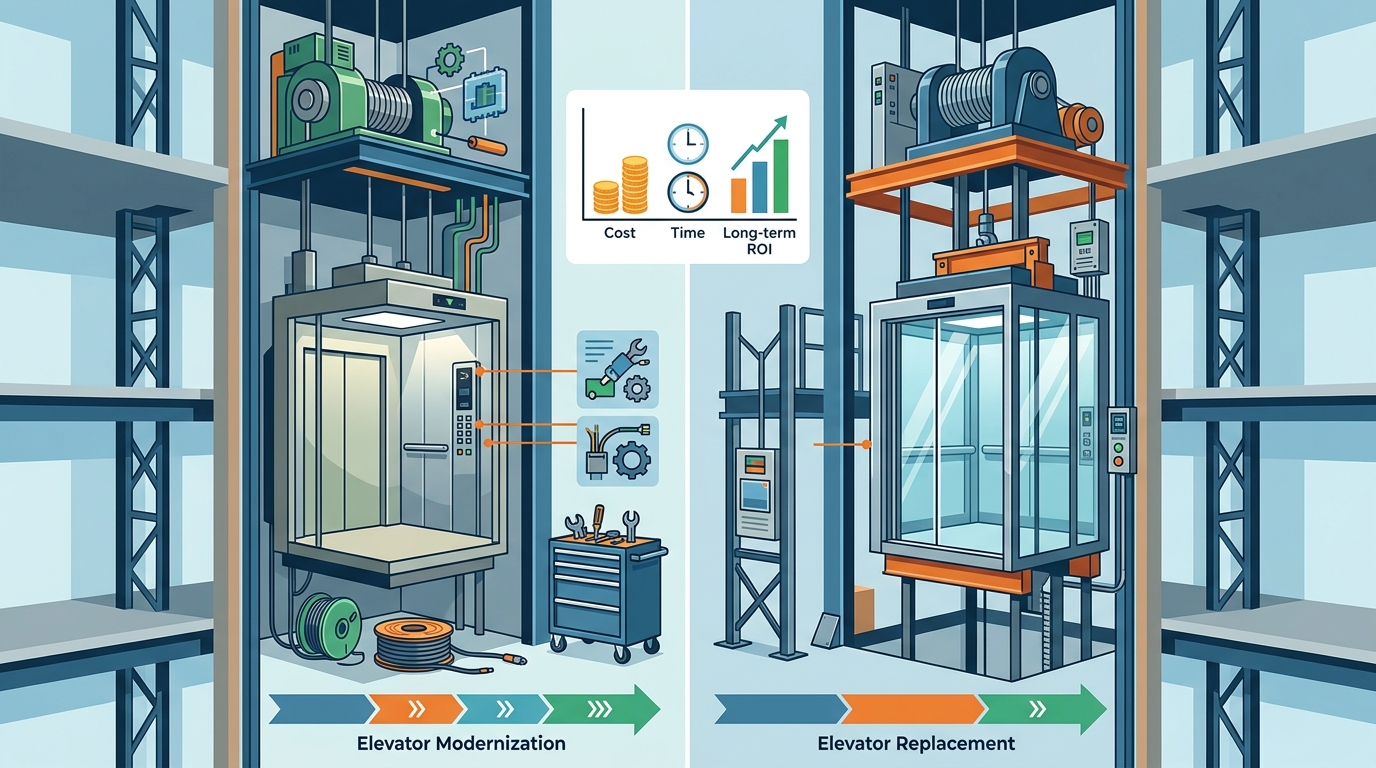
Elevator modernization is the process of upgrading the core mechanical and electrical components of an existing elevator system while retaining the original car, cab, and often the shaft infrastructure. This approach is designed to extend the lifespan of the equipment by 15 to 20 years without the massive capital expenditure of a full replacement. Modernization typically involves replacing the control panel, motor, drive system, and door operators with newer, more efficient technology. (Elevator Code Compliance Services)
Modernization is ideal for buildings where the elevator shaft is structurally sound, but the internal mechanics are outdated. For example, replacing a traditional relay-based control system with a microprocessor-based controller can drastically reduce energy consumption and improve ride quality. At AR Elevator USA, we specialize in transforming aging elevators into smart, efficient systems using cutting-edge IoT technology. This allows building managers to monitor performance in real-time and predict failures before they occur. (Annual Inspection Deficiency Repair)
The primary benefit of modernization is cost efficiency. By reusing the existing infrastructure, property owners avoid the high costs associated with demolition, shaft reconstruction, and new cab fabrication. However, modernization is not a one-size-fits-all solution. It requires a thorough diagnostic assessment to ensure the existing rails, guide shoes, and counterweight systems are compatible with new, heavier, or faster components.
When Full Replacement is Necessary
Full elevator replacement involves removing the entire existing system, including the car, cab, machinery, and often the control wiring, and installing a brand-new unit from the ground up. This is the only viable option when the elevator is beyond its economic life, typically defined as 20 to 30 years of service, or when the shaft infrastructure is damaged or incompatible with modern standards.
Replacement is necessary when the cost of modernization approaches 60-70% of the cost of a new installation. In such cases, investing in a new system provides a better return on investment (ROI) through improved energy efficiency, enhanced safety features, and modern aesthetic appeal. Additionally, replacement allows for a complete redesign of the elevator car to meet current architectural trends and accessibility requirements under the Americans with Disabilities Act (ADA).
For commercial buildings in Las Vegas and Henderson, full replacement is often driven by the need to increase property value. A new elevator system signals to potential tenants that the building is well-maintained and technologically advanced. It also eliminates the recurring costs of emergency repairs and part sourcing for obsolete equipment that is no longer manufactured.
Cost Comparison: Modernization vs. Replacement
Understanding the financial implications is the first step in the decision-making process. While costs vary based on elevator type, height, and brand, general industry benchmarks provide a clear framework for budgeting.
| Factor | Elevator Modernization | Full Replacement |
|---|---|---|
| Estimated Cost Range | $35,000 - $65,000 | $80,000 - $150,000+ |
| Primary Cost Drivers | Control systems, motors, door operators | Shaft work, new car, machinery, installation |
| ROI Timeline | 3-5 years via energy savings | 5-8 years via efficiency & property value |
| Lifespan Extension | 15-20 years | 25-30 years |
| Best For | Structurally sound shafts, older mechanics | Obsolete systems, damaged shafts, high-traffic |
Modernization offers a lower upfront cost, making it attractive for property owners with limited capital budgets. However, the long-term value of replacement must be considered. If the existing elevator requires frequent emergency repairs, the cumulative cost of downtime and service calls can quickly exceed the price of a new system. AR Elevator USA provides transparent pricing for both options, ensuring you understand the total cost of ownership for each path.
Disruption & Timeline Analysis
For commercial buildings, elevator downtime directly impacts tenant satisfaction and operational efficiency. The timeline for modernization is typically shorter than for replacement. A standard modernization project can be completed in 4 to 8 weeks, depending on the complexity of the control system upgrade and the availability of parts. During this time, the elevator may be out of service for several days at a time as components are swapped out.
Full replacement is a more invasive process. It involves demolishing the old car and machinery, which can take 8 to 12 weeks or longer. The timeline is often extended by the need for custom fabrication of the new car and the potential discovery of unforeseen shaft issues during demolition. For high-rise buildings, the disruption is even more significant, requiring careful coordination to maintain partial service during the transition.
AR Elevator USA minimizes disruption through precise project management and 24/7 responsive support. We understand that every day of downtime costs money. Our team works efficiently to complete modernization projects quickly, while providing detailed timelines and contingency plans for replacement projects to keep building operations running as smoothly as possible.
Technology & IoT Integration
One of the most significant advantages of modernization is the ability to integrate smart technology into an existing system. The Giga Lift Smart IoT Elevator Services offered by AR Elevator USA allow for real-time monitoring, predictive maintenance, and enhanced user experience. By upgrading the control system, you can enable features such as destination dispatch, keyless entry, and remote diagnostics.
Full replacement also allows for the latest technology integration, but it comes at a higher cost. However, a new system is built from the ground up to support IoT connectivity, ensuring seamless integration with building management systems (BMS). This is particularly important for green building certifications, as modern elevators can reduce energy consumption by up to 50% compared to older models.
Whether you choose modernization or replacement, upgrading to a smart elevator system is a wise investment. It improves safety, reduces energy costs, and enhances the overall tenant experience. AR Elevator USA is a leader in smart elevator technology, providing tailored solutions that meet the specific needs of your building.
Code Compliance & Safety Regulations
Elevator safety is non-negotiable. Both modernization and replacement must comply with current safety codes, including ASME A17.1, A17.2, and A17.3 standards. In Nevada, additional state regulations may apply, requiring professional compliance consultancy solutions. AR Elevator USA is a Nevada state elevator regulation expert, ensuring that all work meets or exceeds local and federal codes.
Modernization often triggers a requirement for a full safety inspection to verify that the upgraded components meet current standards. If the existing shaft or machinery does not meet code, additional repairs may be necessary, which can increase the cost of modernization. In such cases, replacement may be a more cost-effective option in the long run.
Annual Inspection Deficiency Repair Services are critical for maintaining compliance. AR Elevator USA provides professional repair services to clear all deficiencies before work permit expiration, ensuring your building remains operational and safe. Our certified technicians perform Category 1 and Category 5 inspections with advanced equipment to guarantee comprehensive safety documentation.
Key Takeaways
- Cost Efficiency: Modernization typically costs 40-60% less than full replacement, making it ideal for budget-conscious owners.
- Lifespan Extension: Modernization can extend an elevator's life by 15-20 years, while replacement offers 25-30 years.
- Technology: Both options allow for IoT integration, but modernization can retrofit smart features into older systems.
- Disruption: Modernization projects are generally faster (4-8 weeks) than replacement projects (8-12+ weeks).
- Compliance: Both require adherence to ASME A17.1, A17.2, and A17.3 standards, with Nevada-specific regulations applying.
- ROI: Replacement offers higher long-term ROI through energy savings and increased property value.
- Expertise: AR Elevator USA provides transparent pricing and 24/7 support for both modernization and replacement.
Frequently Asked Questions
How do I know if my elevator needs modernization or replacement?
The decision depends on the age of the system, the condition of the shaft, and the cost of repairs. If the elevator is over 20 years old and requires frequent repairs, replacement may be more cost-effective. If the shaft is sound and the main issue is outdated controls, modernization is the better choice.
What is the average cost of elevator modernization in Nevada?
Elevator modernization in Nevada typically ranges from $35,000 to $65,000, depending on the elevator type, height, and the scope of the upgrade. AR Elevator USA provides detailed quotes based on a comprehensive assessment.
Can I install smart IoT technology in an older elevator?
Yes, modernization allows for the integration of smart IoT technology, such as real-time monitoring and predictive maintenance, into older elevator systems. This enhances efficiency and safety without the need for a full replacement.
How long does an elevator modernization project take?
A standard modernization project takes 4 to 8 weeks. The timeline can vary based on the complexity of the control system upgrade and the availability of parts. AR Elevator USA works to minimize downtime and keep your building operational.
What are the ASME standards for elevator safety?
The primary ASME standards for elevator safety are A17.1 (Safety Code for Elevators and Escalators), A17.2 (Accessibility and Safety Code), and A17.3 (Emergency Power Operation). All modernization and replacement work must comply with these codes.
Does elevator modernization improve energy efficiency?
Yes, modernizing the motor, drive system, and control panel can significantly improve energy efficiency. Upgrading to a permanent magnet motor (PMM) and regenerative drive can reduce energy consumption by up to 50%.
What is the difference between Category 1 and Category 5 inspections?
Category 1 inspections are annual safety inspections required by law, while Category 5 inspections are comprehensive tests performed every five years to verify the elevator's safety and performance. Both are critical for compliance and safety.
Contact AR Elevator USA for Your Elevator Solution
Whether you need elevator modernization, full replacement, or preventive maintenance, AR Elevator USA is your trusted partner in Nevada and the Western region. We provide transparent pricing, 24/7 responsive support, and expert craftsmanship to ensure your elevator systems are safe, reliable, and efficient. Contact us today to schedule a consultation and get a free quote for your project.
Contact AR Elevator USA to learn more about our services.