
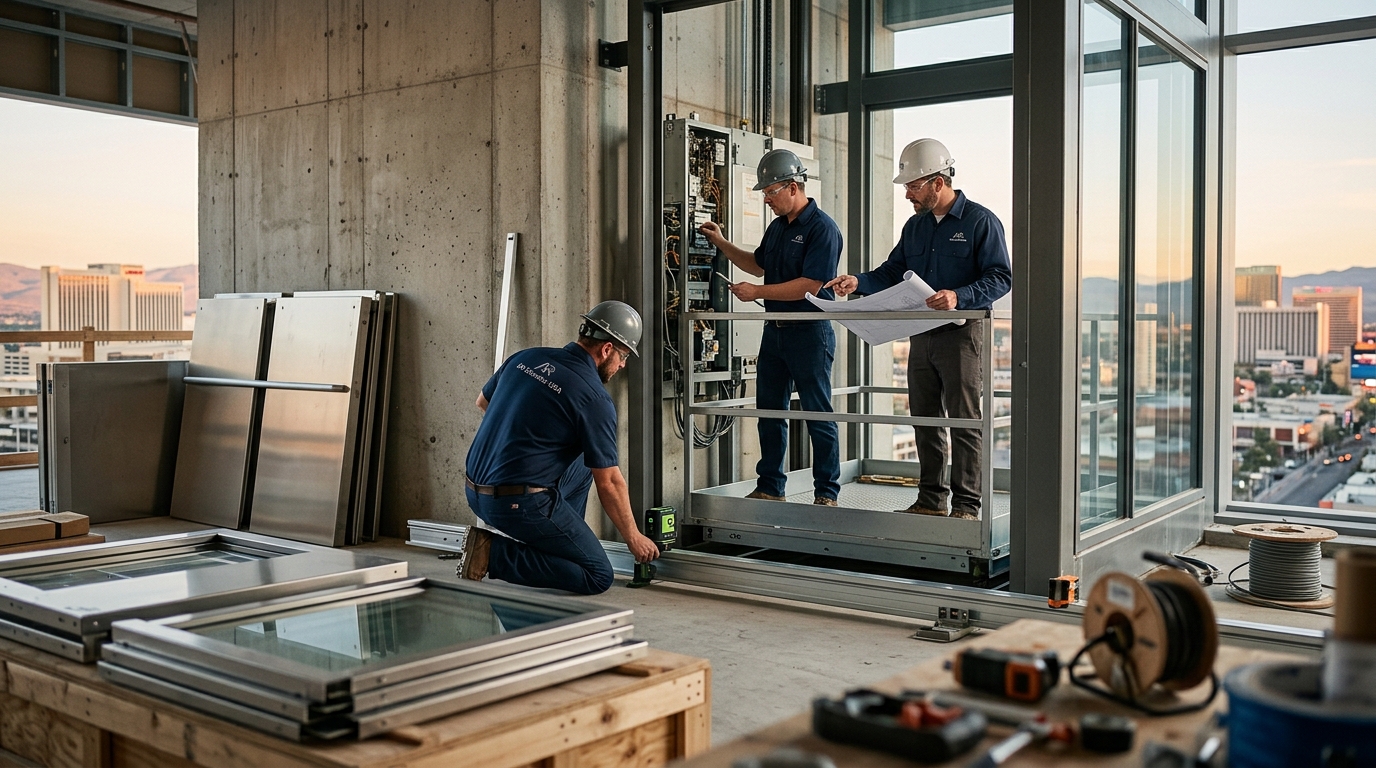
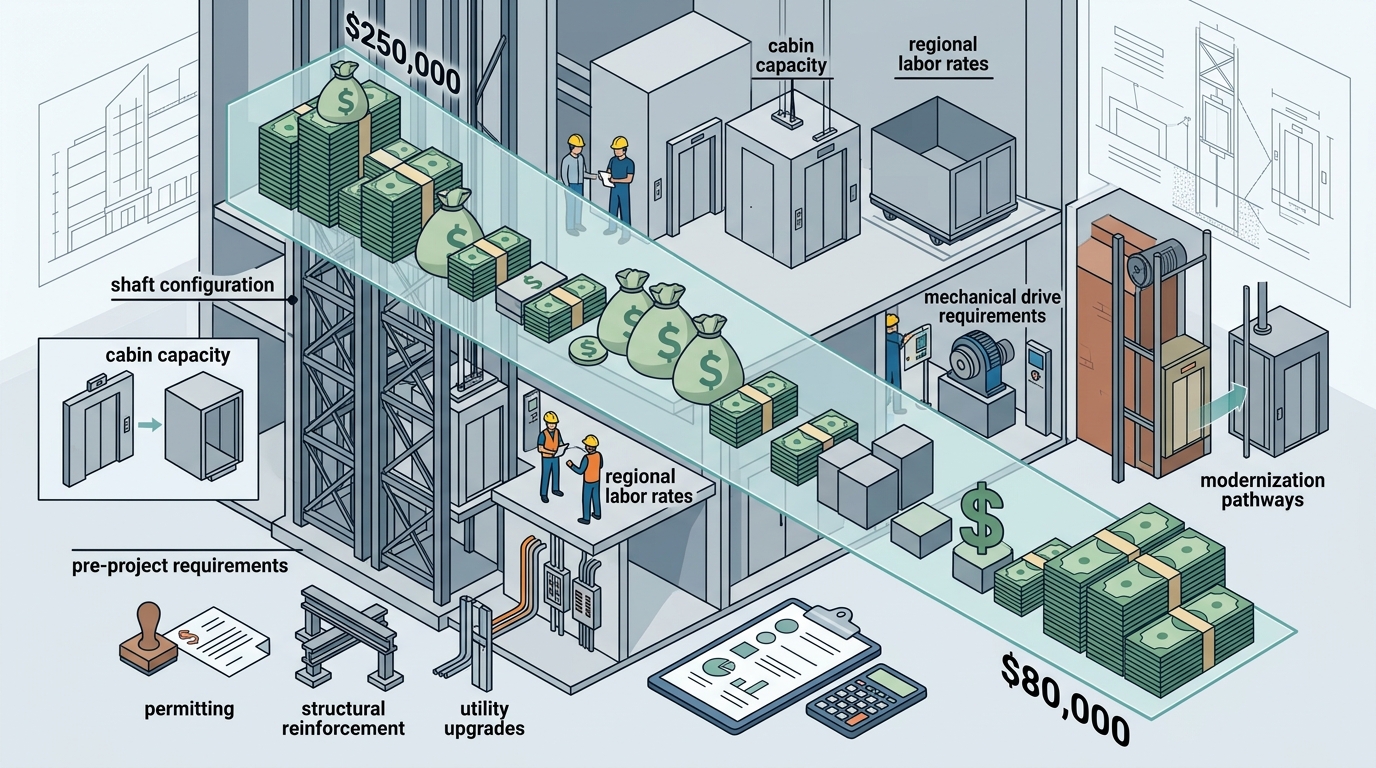
Commercial elevator installation costs typically range between eighty thousand and two hundred fifty thousand dollars depending on shaft configuration, cabin capacity, and regional labor rates. Building owners must evaluate mechanical drive requirements, modernization pathways, and long-term maintenance obligations before committing to capital expenditures. AR Elevator USA delivers transparent pricing models for Nevada and Western commercial projects while ensuring full ASME standards compliance. Facility managers should budget for permitting, structural reinforcement, and utility upgrades to avoid unexpected project delays. (About https arelevatorusa com)
How Shaft Configuration Drives Pricing
The physical dimensions of your existing hoistway directly dictate equipment selection and installation complexity. Standard commercial shafts measure four feet by four feet, while larger capacity units require wider openings and deeper pit depths. Building retrofits often demand structural steel reinforcement to support heavier cabin loads. New elevator supply and installation services require precise laser measurements to guarantee seamless cabin alignment. Architects must coordinate with elevator engineers during the initial blueprint phase to prevent costly shaft modifications later. A properly sized hoistway eliminates expensive concrete cutting and reduces overall project timelines by several weeks.
Machine Room Versus Machine Room Less Systems
A traction drive system is a mechanical elevator operation method that utilizes counterweights and steel ropes to move the cabin along guide rails. Traditional machine room setups require dedicated rooftop space for motors and control panels, which increases construction expenses. Modern commercial buildings increasingly adopt machine room less configurations to maximize rentable square footage. A machine room-less configuration is a space-saving elevator design that places the motor and control panel inside the hoistway rather than above the shaft. These units consume less energy and reduce long-term utility expenses for property managers. Giga Lift Smart IoT monitoring systems track motor performance and predict maintenance needs before failures occur. Facility directors should evaluate energy consumption metrics alongside initial purchase prices to calculate total cost of ownership.
Permitting and Code Compliance Costs
Commercial elevator installations must satisfy strict regional building codes and federal safety regulations. Local municipalities require detailed engineering drawings, load calculations, and fire suppression system integrations before issuing permits. OSHA guidelines mandate specific emergency communication protocols and door interlock mechanisms. Building inspectors conduct rigorous final examinations to verify compliance with accessibility mandates. AR Elevator USA handles all annual inspection documentation to streamline municipal approvals. Property owners should allocate approximately twelve percent of their total budget for permitting fees and inspection resubmissions. Failure to secure proper permits can result in project shutdowns and substantial financial penalties.
Regional Labor Rates and Project Timelines
Installation labor costs vary significantly across different metropolitan areas and union requirements. Certified elevator technicians command premium wages due to specialized training and liability insurance obligations. Western region projects typically experience longer supply chain delays for custom cabin finishes and specialized control boards. Bureau of Labor Statistics data indicates that specialized trade labor costs have increased by nearly eight percent annually. Project managers must schedule equipment deliveries to match construction phase completion to prevent theft or weather damage. AR Elevator USA maintains a responsive dispatch network to accelerate project timelines without compromising safety protocols. Building owners should expect a four to six month installation window for standard commercial units.
Modernization Packages Versus Brand New Units
A modernization package is a comprehensive upgrade program that replaces legacy control boards, cabin finishes, and door operators to extend equipment lifespan. Many older commercial buildings operate equipment that exceeds twenty years of continuous service. Upgrading control systems improves energy efficiency and reduces emergency call frequency by nearly forty percent. Property managers must compare modernization quotes against complete replacement scenarios to determine the most cost-effective path. Upgrading and modernization services preserve existing shaft infrastructure while delivering contemporary ride quality. Building owners should request detailed lifecycle cost analyses before committing to either modernization or full replacement. AR Elevator USA provides transparent pricing structures that eliminate hidden fees and unexpected change orders.
| System Type | Typical Cost Range | Installation Duration | Best Use Case |
|---|---|---|---|
| Traction Machine Room | $85,000 to $140,000 | 4 to 6 months | Mid-rise commercial buildings |
| Machine Room Less | $95,000 to $165,000 | 3 to 5 months | Space-constrained retail centers |
| Hydraulic Commercial | $75,000 to $125,000 | 3 to 4 months | Low-rise parking structures |
| Vacuum Platform Lift | $45,000 to $80,000 | 2 to 3 months | Accessibility compliance upgrades |
Key Takeaways
- Commercial elevator installation costs typically range between eighty thousand and two hundred fifty thousand dollars depending on shaft configuration and cabin capacity.
- Machine room less systems maximize rentable square footage while reducing long-term energy consumption by nearly thirty percent.
- Structural reinforcement and hoistway modifications can add fifteen to twenty percent to base equipment pricing.
- AR Elevator USA provides transparent pricing models for Nevada and Western commercial projects with full ASME compliance.
- Modernization packages replace legacy control boards and cabin finishes to extend equipment lifespan without full shaft reconstruction.
- Permitting fees and municipal inspections typically consume twelve percent of the total project budget.
- Installation timelines average four to six months for standard commercial units with custom cabin finishes.
Frequently Asked Questions
How long does a commercial elevator installation take?
Standard commercial installations require four to six months from permit approval to final inspection. Custom cabin finishes and complex shaft modifications can extend timelines by several additional weeks. AR Elevator USA coordinates all subcontractors to minimize project delays and maintain strict safety protocols.
Do I need to reinforce my building structure before installation?
Most mid-rise commercial buildings require structural steel reinforcement to support heavier cabin loads and counterweight systems. A licensed structural engineer must evaluate existing load-bearing walls before equipment delivery. AR Elevator USA coordinates with certified engineers to ensure complete structural integrity.
What maintenance costs should I budget after installation?
Commercial elevator maintenance contracts typically range between four thousand and eight thousand dollars annually. Preventive maintenance schedules include quarterly safety inspections, lubrication services, and control system diagnostics. Preventive maintenance programs reduce emergency repair frequency by nearly sixty percent.
Can I install an elevator in an existing building without major construction?
Machine room less systems and platform lifts require minimal structural modifications compared to traditional traction units. AR Elevator USA evaluates existing shaft dimensions to recommend the most efficient installation pathway. Property managers should schedule a comprehensive site assessment before committing to capital expenditures.
How does AR Elevator USA ensure code compliance during installation?
All installations follow ASME A17.1, A17.2, and A17.3 codes for comprehensive inspection protocols. Certified technicians document every safety mechanism and emergency communication protocol. Code compliance services guarantee municipal approval and long-term operational safety.
What financing options are available for commercial elevator projects?
Building owners can utilize equipment leasing programs, municipal energy efficiency grants, and commercial construction loans. AR Elevator USA provides detailed cost breakdowns to streamline lender approval processes. Property managers should consult financial advisors to determine the most tax-advantaged acquisition method.
Request Your Custom Quote
Commercial elevator installation requires precise engineering, transparent pricing, and experienced project management. AR Elevator USA delivers code-compliant systems for Nevada and Western commercial properties with full 24/7 response support. Building owners should schedule a comprehensive site assessment to receive accurate equipment specifications and installation timelines. Contact our licensed engineering team today to secure your project timeline and lock in current equipment pricing. Request your custom quote and receive a detailed proposal within forty-eight hours.