
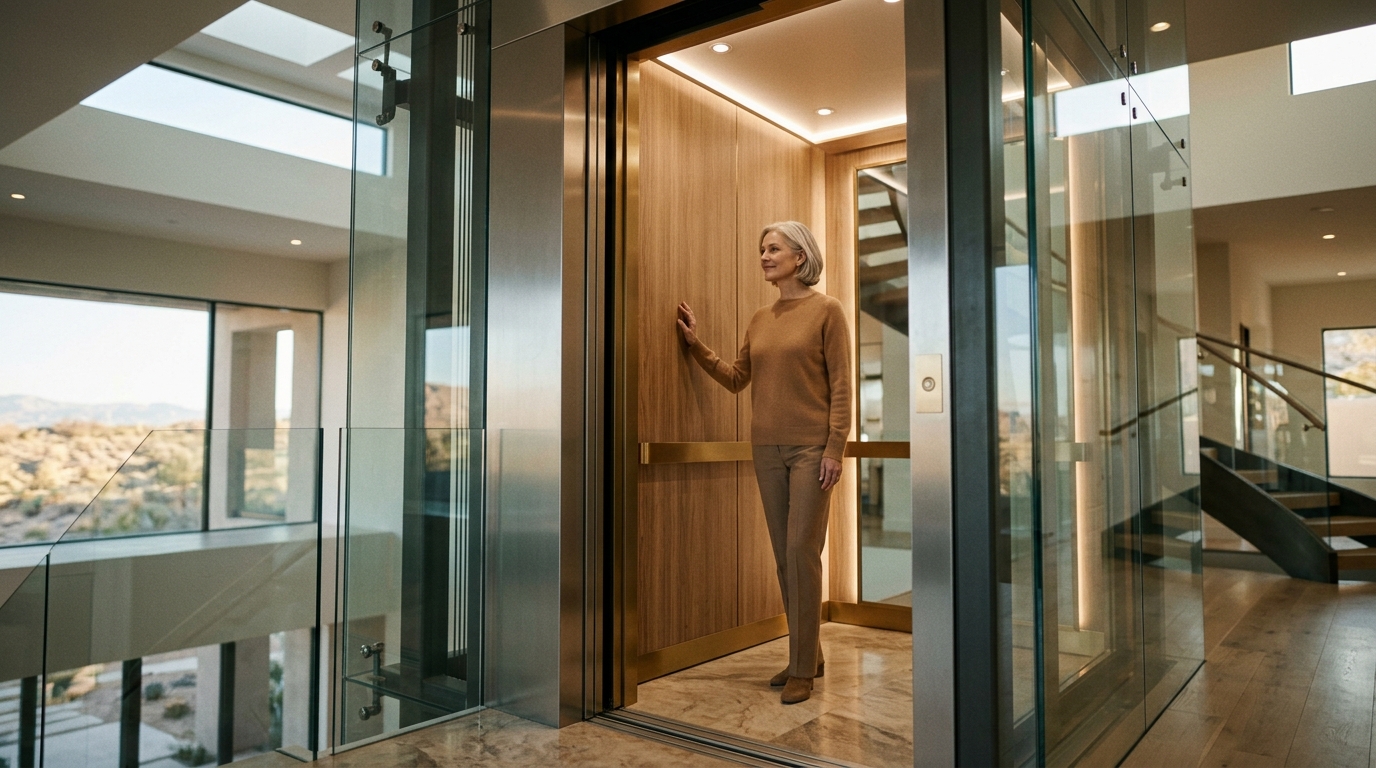
Vertical transportation in private residences has evolved from a luxury niche to a standard requirement for aging-in-place and multi-level living. According to recent industry data, the global residential elevator market is projected to grow significantly, driven by an aging population and increased demand for accessibility in high-end real estate. Understanding the specific mechanical differences between elevator types is critical for homeowners in Nevada, where climate and building codes dictate installation feasibility. This guide details the primary options available, from hydraulic systems to modern machine-room-less designs, ensuring you select the right solution for your property.
Hydraulic Elevator Systems
Hydraulic elevators remain one of the most common choices for residential installations, particularly in homes with basements or ground-level pits. These systems operate using a piston and cylinder mechanism that pushes the elevator car upward. The defining characteristic of this technology is its reliance on fluid pressure to generate movement.
Hydraulic elevator is a vertical transportation system that uses a hydraulic fluid, typically oil, to raise and lower the elevator car via a piston. This design allows for flexible installation in buildings with limited shaft space, as the machinery can be housed in a small closet or even the basement. For homeowners in Las Vegas and Henderson, the reliability of hydraulic systems is often preferred due to their robust performance in varying temperatures.
While hydraulic elevators are known for their smooth ride and lower initial installation costs compared to some traction models, they do require regular maintenance to prevent fluid leaks. AR Elevator USA provides comprehensive residential elevator services that include routine inspections to ensure the hydraulic fluid levels and piston integrity remain optimal. This proactive approach minimizes downtime and extends the lifespan of the equipment.
Machine-Room-Less (MRL) Traction
Machine-room-less (MRL) elevators represent a significant advancement in residential vertical transportation technology. Unlike traditional traction elevators that require a dedicated machine room at the top of the shaft, MRL systems house the motor and control equipment within the shaft itself, typically above the elevator car.
MRL elevator is a space-efficient vertical transport solution that eliminates the need for a separate machine room by integrating the drive mechanism into the hoistway. This design is particularly advantageous for modern homes where architectural space is at a premium. The compact nature of MRL systems allows for greater flexibility in home design, enabling architects to utilize space that would otherwise be wasted on mechanical rooms.
These systems are highly energy-efficient, often consuming less power than hydraulic counterparts. They utilize regenerative drives that convert potential energy back into electricity during descent, reducing the overall carbon footprint. For homeowners concerned with power efficiency, MRL elevators offer a sustainable solution that aligns with green building standards. AR Elevator USA specializes in the installation of these advanced systems, ensuring they meet all code compliance requirements for Nevada.
Pneumatic Vacuum Elevators
Pneumatic vacuum elevators, often referred to as tube elevators, offer a unique alternative to traditional mechanical systems. These elevators operate using air pressure differentials to move the car up and down a transparent tube. The technology is self-contained, requiring no pit, machine room, or overhead hoistway.
Pneumatic vacuum elevator is a self-contained vertical transportation system that uses air pressure to lift a vacuum-sealed cabin through a transparent tube. This design is ideal for homes where structural modifications are difficult or prohibited. The aesthetic appeal of a glass tube elevator adds a modern architectural element to any residence, providing natural light and visibility.
Installation is rapid and non-invasive, often taking just a few days to complete. However, the capacity of pneumatic elevators is generally lower than hydraulic or traction models, making them suitable for individuals or small families. AR Elevator USA evaluates each property to determine if a pneumatic system is a viable option based on structural integrity and load requirements.
Platform Lifts and VRCs
For homeowners who do not require a full-sized elevator car, platform lifts and Vertical Reciprocating Conveyors (VRCs) offer a cost-effective alternative. These systems are designed to transport individuals in wheelchairs or small loads between levels.
Platform lift is a mechanical device that raises and lowers a flat platform to provide accessibility for individuals with mobility challenges. These lifts are often used in homes where a full elevator is not feasible due to budget or space constraints. They comply with ASME B20.1-2018 standards, ensuring safety and reliability for residential use.
VRCs, while primarily designed for freight, can be adapted for residential use in multi-story homes with heavy equipment or large items. AR Elevator USA offers platform lift and VRC services that include supply, installation, and ongoing maintenance. These solutions are particularly useful for homes with home offices or workshops on upper levels.
Smart IoT and Modernization
The integration of Internet of Things (IoT) technology into residential elevators is transforming how homeowners interact with and maintain their vertical transportation systems. Smart elevators provide real-time monitoring, predictive maintenance alerts, and enhanced safety features.
Smart IoT elevator is a connected vertical transport system that utilizes sensors and cloud-based analytics to monitor performance and predict maintenance needs. This technology allows for remote diagnostics, reducing the need for on-site visits and minimizing downtime. AR Elevator USA’s Giga Lift Smart IoT Elevator Services leverage this technology to provide homeowners with unprecedented control and visibility over their elevator systems.
Modernization is another critical aspect of residential elevator ownership. Aging elevators can be upgraded with new controls, motors, and safety features to extend their lifespan and improve efficiency. AR Elevator USA offers elevator upgrading, alteration, and modernization services that transform outdated systems into smart, efficient, and safe units.
Comparison of Residential Options
Selecting the right elevator type requires a careful comparison of factors such as cost, space requirements, maintenance needs, and aesthetic preferences. The following table summarizes the key characteristics of the primary residential elevator types.
| Elevator Type | Space Requirement | Maintenance Level | Energy Efficiency | Best For |
|---|---|---|---|---|
| Hydraulic | Low (Pit Required) | Moderate | Moderate | Older homes, limited shaft space |
| MRL Traction | Medium (No Machine Room) | Low | High | New construction, modern homes |
| Pneumatic Vacuum | Very Low (Self-Contained) | Low | High | Aesthetic appeal, minimal renovation |
| Platform Lift | Low | Low | Low | Accessibility, budget-conscious |
Key Takeaways
- Hydraulic elevators are reliable and cost-effective but require regular fluid maintenance.
- MRL traction elevators offer high energy efficiency and space savings by eliminating the need for a machine room.
- Pneumatic vacuum elevators provide a non-invasive installation option with aesthetic appeal.
- Platform lifts are ideal for accessibility and smaller loads, complying with ASME B20.1-2018 standards.
- Smart IoT technology enables predictive maintenance and real-time monitoring for residential elevators.
- AR Elevator USA serves Nevada and the Western region with licensed, full-service elevator solutions.
- Code compliance is critical, with inspections following ASME A17.1, A17.2, and A17.3 standards.
Frequently Asked Questions
What is the most energy-efficient residential elevator type?
MRL traction elevators are generally considered the most energy-efficient due to their regenerative drives and lack of hydraulic fluid dependency. They consume significantly less power than traditional hydraulic systems.
Do I need a machine room for a residential elevator?
No, machine-room-less (MRL) elevators and pneumatic vacuum elevators do not require a separate machine room. MRL systems house the machinery in the shaft, while pneumatic systems are self-contained.
How often should a residential elevator be inspected?
Residential elevators should undergo annual inspections to ensure safety and code compliance. AR Elevator USA provides annual inspection and testing services following ASME standards.
Can I upgrade my existing hydraulic elevator to a smart system?
Yes, many hydraulic elevators can be modernized with smart IoT controls and energy-efficient components. AR Elevator USA offers modernization services to upgrade aging systems.
What is the difference between a platform lift and a residential elevator?
A platform lift is designed for accessibility and typically carries a single wheelchair user, while a residential elevator is a full-sized car designed for multiple passengers and luggage. Platform lifts are often less expensive and easier to install.
Are residential elevators safe during power outages?
Most modern residential elevators, including those serviced by AR Elevator USA, are equipped with backup power systems or manual lowering devices to ensure safe evacuation during power outages.
How long does it take to install a residential elevator?
Installation time varies by type. Pneumatic elevators can be installed in a few days, while hydraulic or traction systems may take several weeks depending on the complexity of the home’s structure.
Contact AR Elevator USA
Choosing the right residential elevator is a significant decision that impacts your home’s value, accessibility, and comfort. AR Elevator USA is Nevada’s leading expert in residential elevator services, offering tailored solutions for homes in Las Vegas, Henderson, and the surrounding Western region. Our team of licensed technicians ensures every installation meets the highest standards of safety and code compliance.
Whether you are considering a new installation, a modernization project, or routine maintenance, AR Elevator USA is here to help. Contact us today to schedule a consultation and discover how our smart IoT elevator services can enhance your home. Visit our contact page to request a quote or learn more about our comprehensive preventive maintenance programs.