

Installing a home elevator is no longer a luxury reserved for the ultra-wealthy. According to recent industry data, the residential elevator market has seen a steady growth trajectory, with millions of homeowners opting for accessibility solutions to age in place safely. This shift is driven by an aging population and a growing awareness of universal design principles. Understanding the specific mechanical differences between elevator types is critical for making an informed decision that balances space, budget, and aesthetic preferences.
Hydraulic Elevators: Power and Reliability
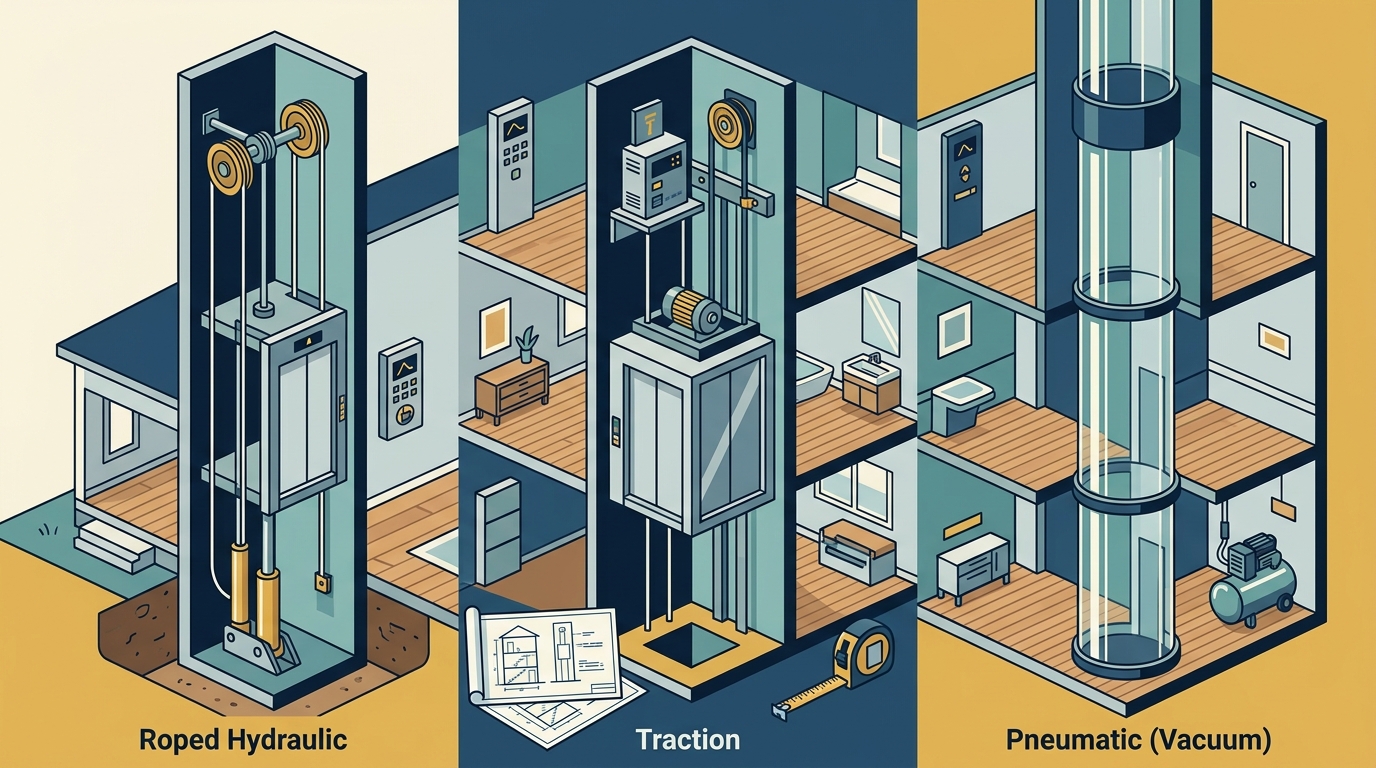
Hydraulic elevators remain one of the most popular choices for residential installations, particularly in homes with basements or crawl spaces. These systems operate using a piston and cylinder mechanism. A hydraulic fluid is pumped into the cylinder, pushing the piston upward to lift the elevator cab. When the cab needs to descend, the fluid is released back into a reservoir, allowing gravity to lower the platform smoothly.
The primary advantage of this system is its simplicity and robustness. Hydraulic elevators do not require a machine room, which saves valuable square footage in the home. They are also known for their smooth ride quality and ability to handle heavy loads, making them ideal for individuals using wheelchairs or mobility aids. However, the installation process involves drilling a hole in the ground for the cylinder, which can be a consideration for some property layouts. (About)
For homeowners in regions with strict environmental regulations, it is important to note that modern hydraulic systems use biodegradable fluids to minimize ecological impact. If you are considering this option, you can learn more about our hydraulic elevator services to see how they fit your specific structural needs.
Machine Room Less (MRL) Traction Elevators
MRL traction elevators represent the modern standard for efficiency and energy conservation. Unlike traditional traction elevators that require a separate machine room at the top of the shaft, MRL systems house the motor and control equipment within the hoistway itself. This compact design allows for greater flexibility in home architecture.
These elevators use steel cables and a counterweight system to move the cab. The counterweight balances the weight of the cab and its load, reducing the amount of energy required to operate the lift. This balance results in smoother acceleration and deceleration, providing a premium riding experience. MRL elevators are particularly suitable for homes with two or more floors where space efficiency is a priority.
Energy efficiency is a major selling point for MRL systems. According to recent sustainability reports, MRL elevators consume significantly less electricity than traditional hydraulic models. This reduction in energy usage translates to lower utility bills over the lifespan of the elevator. For detailed technical specifications, you can explore our MRL elevator product line.
Pneumatic Vacuum Elevators: Space-Saving Innovation
Pneumatic vacuum elevators, often referred to as tube elevators, offer a unique alternative to traditional mechanical systems. These elevators operate using air pressure differentials. A vacuum is created above the cab, causing it to rise. When the vacuum is released, the cab descends using gravity. This system requires no pit, no machine room, and minimal structural modifications to the home.
The most significant benefit of pneumatic elevators is their aesthetic appeal and transparency. The cylindrical glass tube allows natural light to flow through the home, creating a sense of openness. They are also incredibly easy to install, often requiring only a few days of work. This makes them an excellent choice for retrofitting existing homes without extensive construction.
While they offer a distinct visual style, it is important to consider the acoustic properties. Modern pneumatic elevators are designed with sound-dampening materials to ensure quiet operation. For more information on installation timelines and design options, visit our pneumatic elevator guide.
Comparing Key Features and Costs
Choosing the right elevator involves weighing several factors, including installation complexity, maintenance requirements, and overall cost. The table below provides a high-level comparison of the three primary residential elevator types.
| Elevator Type | Installation Complexity | Space Requirements | Energy Efficiency | Best For |
|---|---|---|---|---|
| Hydraulic | Moderate | Requires pit/cylinder space | Moderate | Heavy loads, single-family homes |
| MRL Traction | High | Compact machine room | High | Multi-story homes, energy focus |
| Pneumatic | Low | Minimal structural change | High | Small spaces, aesthetic focus |
Understanding these differences is crucial for budgeting. Hydraulic systems often have lower upfront costs but higher long-term maintenance needs. MRL systems offer a balance of performance and efficiency. Pneumatic elevators, while premium in price, offer unparalleled installation speed and design flexibility. For a detailed breakdown of pricing models, check our pricing page.
Key Takeaways
- Hydraulic elevators use a piston and fluid system, offering robust performance for heavy loads.
- MRL traction elevators house the motor in the shaft, providing superior energy efficiency and a smooth ride.
- Pneumatic vacuum elevators use air pressure, requiring no pit or machine room for easy installation.
- Installation complexity varies, with pneumatic systems being the least invasive for existing homes.
- Energy consumption is a key differentiator, with MRL and pneumatic systems leading in efficiency.
- Aesthetic considerations play a major role, with pneumatic tubes offering a modern, transparent look.
- Long-term maintenance costs should be factored into the decision, with hydraulic systems potentially requiring more frequent service.
Frequently Asked Questions
How much space does a residential elevator require?
Space requirements vary by type. Hydraulic elevators need a pit for the cylinder. MRL elevators require a compact shaft. Pneumatic elevators need a small footprint but no pit, making them ideal for tight spaces.
Are residential elevators safe for children and pets?
Yes, modern residential elevators are equipped with multiple safety features, including safety edges, emergency brakes, and backup power systems. They are designed to be safe for all family members.
Can I install an elevator in an existing home?
Absolutely. Pneumatic and MRL elevators are particularly well-suited for retrofitting. A professional assessment can determine the best option for your home's structure.
What is the average cost of a home elevator?
Costs vary based on type, customization, and installation complexity. Generally, pneumatic elevators are premium-priced, while hydraulic and MRL options offer different price points based on features.
How long does installation take?
Pneumatic elevators can be installed in a few days. Hydraulic and MRL systems may take several weeks due to construction requirements. Contact us for a precise timeline.
Do home elevators require a machine room?
Traditional traction elevators do. However, MRL and hydraulic systems are designed to operate without a separate machine room, saving valuable space in your home.
What maintenance is required?
Regular maintenance ensures safety and longevity. This includes lubrication, inspection of mechanical parts, and testing of safety features. Arelevator USA offers comprehensive maintenance plans.
Contact Arelevator USA
Choosing the right residential elevator is a significant decision that impacts your home's functionality and value. Arelevator USA provides expert consultation, custom design, and professional installation services tailored to your unique needs. Whether you are looking for the reliability of a hydraulic system, the efficiency of an MRL elevator, or the innovation of a pneumatic tube, we have the solution.
Ready to transform your home? Contact Arelevator USA today to schedule a free consultation and discover the perfect elevator for your lifestyle.