

Vertical transportation in private homes has evolved from a luxury novelty into a critical accessibility and lifestyle feature. According to recent industry data, the global residential elevator market is projected to grow significantly, with North America leading in adoption rates due to an aging population and increased multi-story construction. Homeowners must understand the mechanical differences between systems to balance cost, space, and energy efficiency. This guide details the primary elevator types available for residential use, including hydraulic, machine-room-less (MRL) traction, and rack-and-pinion systems. (About https arelevatorusa com)
Hydraulic Elevator Systems
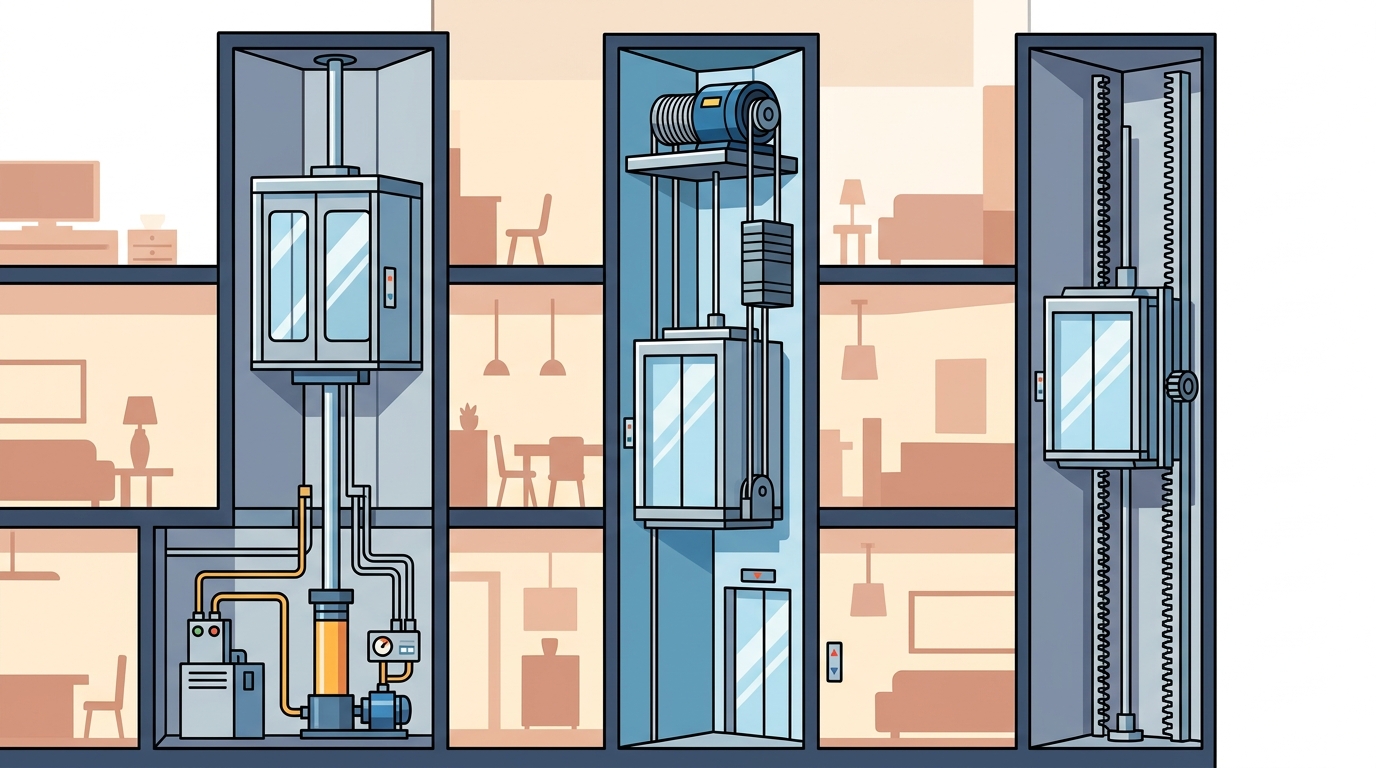
Hydraulic elevators are among the most traditional and widely installed residential systems. They operate using a hydraulic piston located in a cylinder, which pushes the elevator car upward. This mechanism is similar to how a car jack works, providing a smooth and steady ride. (Elevator Annual Inspection amp)
How Hydraulic Systems Work
A hydraulic elevator is powered by an electric pump that forces fluid into the cylinder. When the fluid is released, gravity pulls the car back down. This system is known for its reliability and ability to handle heavy loads. However, it requires a dedicated machine room or a large closet to house the pump and motor.
Pros and Cons
The primary advantage of hydraulic elevators is their lower initial cost compared to traction systems. They are also easier to install in buildings with limited headroom because the hoistway does not require a top machine room. However, they consume more energy because the pump must run continuously to maintain pressure. Additionally, there is a risk of hydraulic fluid leaks, which can be environmentally hazardous and costly to clean up.
For homeowners in Nevada, where climate control and energy efficiency are paramount, modern hydraulic systems have improved significantly. AR Elevator USA Power Efficiency initiatives focus on reducing the energy footprint of these traditional systems through regenerative drives and improved seal technologies.
Machine-Room-Less (MRL) Traction Elevators
Machine-room-less (MRL) traction elevators represent the modern standard for high-rise residential buildings and luxury homes. Unlike traditional traction elevators that require a separate machine room at the top of the shaft, MRL systems place the motor and controller directly inside the hoistway.
Space Efficiency
The defining feature of an MRL elevator is its compact footprint. By eliminating the need for a dedicated machine room, homeowners can utilize that space for additional living areas, storage, or mechanical rooms. This makes MRL elevators ideal for new construction where every square foot counts.
Energy and Performance
MRL elevators are significantly more energy-efficient than hydraulic systems. They use a counterweight system to balance the weight of the car, meaning the motor only needs to provide enough power to move the difference in weight. This results in lower electricity bills and reduced wear on mechanical components. Giga Lift Smart IoT Elevator Services can be integrated into MRL systems to provide real-time monitoring and predictive maintenance, ensuring maximum uptime.
Rack and Pinion Elevators
Rack and pinion elevators are a unique type of vertical transportation often used in residential applications where space is extremely limited. They operate using a gear system where a pinion gear engages with a rack (a toothed rail) attached to the elevator car.
Installation Flexibility
One of the biggest advantages of rack and pinion systems is their installation flexibility. They do not require a pit at the bottom of the shaft or a machine room at the top. This makes them perfect for retrofitting into existing homes without major structural modifications. The system is also highly durable and can operate in extreme temperatures, making it suitable for various climates.
Limited Capacity
While rack and pinion elevators are versatile, they typically have lower weight capacities and slower speeds compared to hydraulic or traction systems. They are best suited for two- to three-story homes and are often used as platform lifts or small passenger elevators.
Platform Lifts and VRCs
Platform lifts and Vertical Reciprocating Conveyors (VRCs) are often confused with traditional elevators, but they serve different purposes. A platform lift is a simplified vertical transportation device that typically moves a platform up and down along a guide rail. It is often used for accessibility purposes, such as moving wheelchairs or heavy equipment.
Compliance and Safety
Platform lifts must comply with specific safety standards, such as ASME B20.1-2018. While they are less expensive and easier to install than full elevators, they may not meet all residential elevator codes depending on the jurisdiction. Platform Lift & VRC Services ensure that these systems are installed correctly and safely.
Use Cases
Platform lifts are ideal for homes with narrow shafts or where a full elevator installation is not feasible. They are also commonly used in industrial settings for moving goods between floors. For residential use, they provide a cost-effective solution for accessibility, though they lack the comfort and speed of traditional elevators.
Comparing Residential Elevator Options
Choosing the right elevator type depends on several factors, including budget, space, and intended use. The following table summarizes the key differences between the most common residential elevator types.
| Elevator Type | Space Requirement | Energy Efficiency | Best For | Cost Range |
|---|---|---|---|---|
| Hydraulic | Medium (requires pump room) | Low | Low-rise homes, retrofits | $$ |
| MRL Traction | Low (no machine room) | High | New construction, luxury homes | $$$ |
| Rack and Pinion | Very Low | Medium | Small shafts, 2-3 stories | $ |
| Platform Lift | Minimal | High | Accessibility, narrow spaces | $ |
Key Takeaways
- Hydraulic elevators are reliable and cost-effective but consume more energy and require space for the pump.
- MRL traction elevators offer the best balance of space efficiency and energy savings, making them ideal for new builds.
- Rack and pinion systems provide installation flexibility for homes with limited shaft space.
- Platform lifts are a budget-friendly option for accessibility but may not meet all elevator codes.
- Smart IoT technology can be integrated into any elevator type to improve maintenance and safety.
- Code compliance is critical; all installations must meet ASME A17.1 standards.
- Professional maintenance ensures longevity and safety, with AR Elevator USA providing comprehensive service plans.
Frequently Asked Questions
What is the most energy-efficient residential elevator?
MRL traction elevators are generally the most energy-efficient due to their counterweight system and regenerative drives. They consume significantly less power than hydraulic systems.
Do I need a machine room for a residential elevator?
Not necessarily. MRL traction elevators and rack and pinion systems do not require a dedicated machine room, saving valuable space in your home.
How much does a residential elevator cost?
Costs vary widely based on type, size, and customization. Hydraulic elevators typically range from $25,000 to $50,000, while MRL traction elevators can cost $50,000 to $100,000 or more.
Can I install an elevator in an existing home?
Yes, many residential elevators are designed for retrofitting. Rack and pinion and platform lifts are particularly suitable for existing homes with limited space.
What safety standards apply to residential elevators?
Residential elevators must comply with ASME A17.1 and local building codes. Annual Inspection & Testing Services ensure ongoing compliance.
How often should a residential elevator be serviced?
Regular maintenance is crucial. Preventive maintenance should be performed quarterly to ensure safety and longevity.
What is the difference between a passenger elevator and a platform lift?
Passenger elevators are designed for comfort and speed, while platform lifts are simpler, slower, and often used for accessibility or freight.
Contact AR Elevator USA
Choosing the right residential elevator is a significant decision that impacts your home's value, accessibility, and daily comfort. AR Elevator USA specializes in designing, installing, and maintaining elevator systems tailored to your specific needs. Whether you are considering a hydraulic system for a retrofit or an MRL traction elevator for new construction, our team of experts is here to help.
We serve Nevada and the Western region with licensed, full-service elevator solutions. Our commitment to safety, reliability, and precision ensures that your elevator system will stand the test of time. Contact us today to schedule a consultation and receive a transparent, upfront quote for your project.
Contact AR Elevator USA to discuss your residential elevator needs.