
Vertical transportation in private homes has evolved from a luxury novelty to a critical accessibility necessity. According to the U.S. Census Bureau, the population aged 65 and older is projected to reach nearly 80 million by 2040, driving a significant increase in demand for home elevators. This demographic shift has transformed the residential elevator market, moving it beyond simple hydraulic systems toward sophisticated, energy-efficient, and smart-connected solutions. Understanding the distinct mechanical advantages of each elevator type is essential for homeowners planning new installations or modernizing aging infrastructure. (About https arelevatorusa com)
Hydraulic Elevator Systems
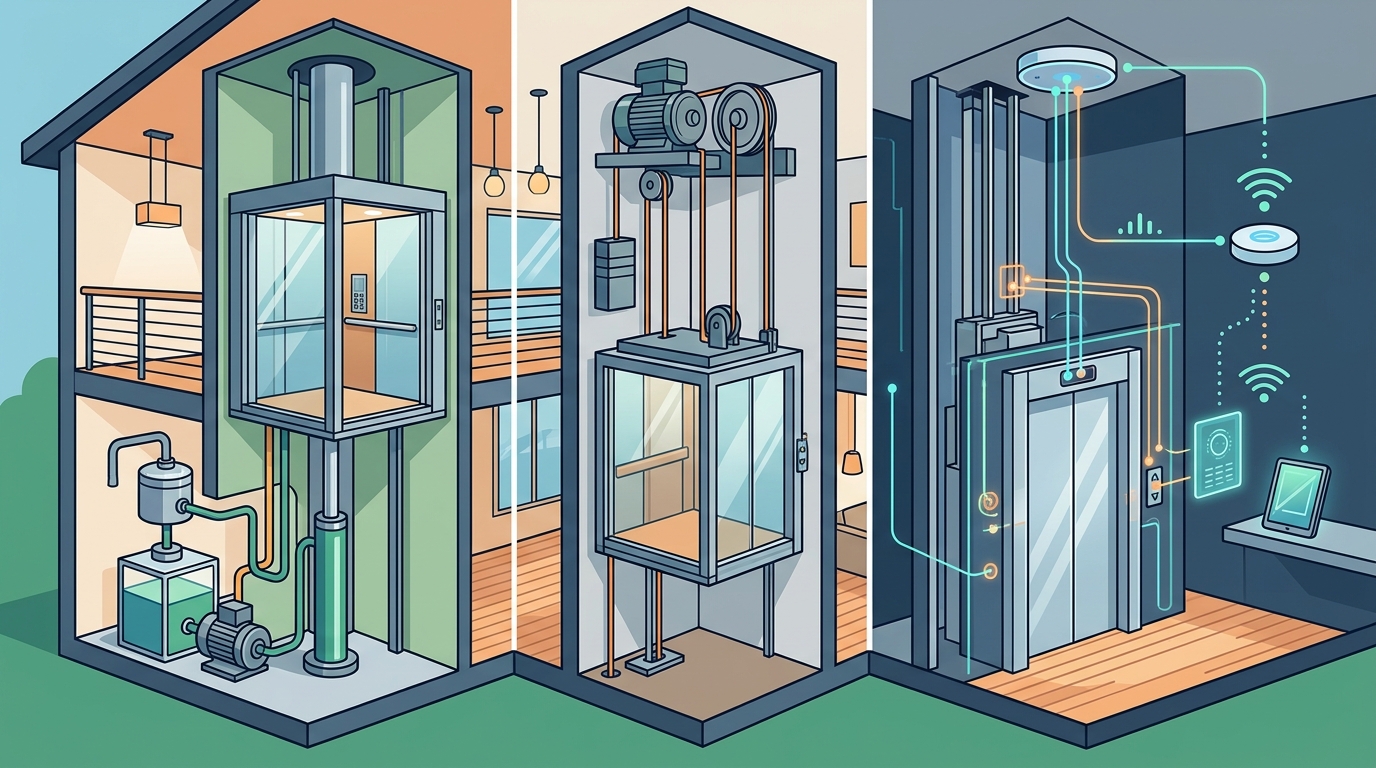
Hydraulic elevators remain the most common choice for residential applications due to their reliability and straightforward mechanical design. These systems operate using a piston and cylinder mechanism that pushes the elevator car upward. The hydraulic fluid is pumped into the cylinder, extending the piston and lifting the car. When the car needs to descend, gravity takes over, and the fluid is released back into a reservoir.
This type of elevator is particularly well-suited for homes with limited headroom or no available machine room space. However, the environmental impact of hydraulic fluid leaks has led to increased scrutiny in recent years. AR Elevator USA addresses these concerns by offering power-efficient hydraulic solutions that minimize fluid usage and energy consumption. For homeowners in Nevada, where climate control and energy efficiency are paramount, these modernized hydraulic systems provide a balanced approach to vertical transportation.
The primary advantage of hydraulic elevators is their ability to operate at lower speeds with heavy loads, making them ideal for multi-story homes. They also require less structural reinforcement than traction systems because the machinery is located at the base of the shaft rather than at the top. This reduces the need for extensive construction modifications during installation.
Traction Elevator Systems
Traction elevators utilize a system of steel ropes or belts that wrap around a sheave, or pulley, connected to an electric motor. Counterweights balance the weight of the elevator car, allowing the motor to operate with greater efficiency. This design is typically associated with commercial high-rises but has become increasingly popular in luxury residential settings due to its smooth ride quality and higher speed capabilities.
For homes with four or more stories, traction elevators offer superior performance compared to hydraulic models. They provide faster travel times and a more seamless experience for passengers. However, they require adequate headroom for the machinery and a pit at the bottom of the shaft. AR Elevator USA specializes in new elevator supply and installation services that tailor these complex systems to residential architectural constraints.
The durability of traction systems is another significant benefit. With fewer moving parts subject to wear compared to hydraulic pistons, these elevators often have longer service intervals. This makes them an attractive option for homeowners seeking a long-term investment in their property’s accessibility and value.
Machine-Room-Less (MRL) Technology
Machine-Room-Less (MRL) elevators represent a significant advancement in residential vertical transportation. In traditional traction systems, the motor and control equipment are housed in a separate machine room, usually at the top of the shaft. MRL technology integrates these components into the hoistway itself, eliminating the need for a dedicated machine room.
This innovation is particularly valuable for existing homes where adding a machine room is structurally impossible or prohibitively expensive. By placing the motor at the top of the shaft or in a compact enclosure, MRL elevators save valuable square footage and reduce construction costs. AR Elevator USA provides comprehensive modernization and upgrading services that can convert older systems into efficient MRL configurations.
The energy efficiency of MRL elevators is also a key selling point. Without the need to power a separate machine room, these systems consume less electricity. This aligns with the growing demand for green building solutions and sustainable home infrastructure. Homeowners looking to reduce their carbon footprint while enhancing accessibility should consider MRL technology as a primary option.
Platform Lifts and VRCs
For homeowners who do not require a full-sized elevator car, platform lifts and Vertical Reciprocating Conveyors (VRCs) offer a cost-effective alternative. These systems are designed to transport individuals or goods between two levels without the need for a traditional elevator cab. Platform lifts are often used for wheelchair accessibility, while VRCs are designed for freight and heavy loads.
AR Elevator USA offers specialized platform lift and VRC services that comply with ASME B20.1-2018 standards. These systems are ideal for homes with unique architectural challenges, such as narrow staircases or limited shaft space. They provide a practical solution for multi-level living without the extensive construction required for full elevators.
The installation process for platform lifts is typically faster and less invasive than for traditional elevators. This makes them an attractive option for homeowners who want to minimize disruption to their daily lives during the installation phase. Additionally, these systems require less maintenance, further reducing long-term ownership costs.
Smart IoT and Modernization
The integration of Internet of Things (IoT) technology into residential elevators is transforming how homeowners interact with and maintain their vertical transportation systems. Smart elevators provide real-time monitoring, predictive maintenance alerts, and enhanced safety features. This technology allows for proactive repairs before breakdowns occur, ensuring maximum uptime and rider comfort.
AR Elevator USA is a leader in Giga Lift Smart IoT Elevator Services, offering intelligent solutions that connect directly to building management systems. These systems can track usage patterns, monitor component health, and optimize energy consumption. For homeowners in Nevada, where regulatory compliance is strict, IoT-enabled elevators also simplify the process of meeting state safety codes.
Modernization is another critical aspect of residential elevator ownership. Aging elevators can be upgraded with new controls, motors, and safety features to extend their lifespan and improve performance. AR Elevator USA provides professional code compliance consultancy to ensure that all modernization projects meet current Nevada state regulations. This ensures that homeowners are not only investing in convenience but also in safety and legal compliance.
Comparative Analysis of Residential Elevator Options
Selecting the right elevator type depends on several factors, including home layout, budget, and specific accessibility needs. The following table summarizes the key characteristics of each major residential elevator type.
| Elevator Type | Best For | Headroom Requirement | Energy Efficiency | Primary Benefit |
|---|---|---|---|---|
| Hydraulic | Low-rise homes, limited shaft space | Low | Moderate (with modernization) | Reliability and smooth ride |
| Traction | High-rise homes, luxury installations | High | High | Speed and durability |
| MRL | Existing homes, space constraints | Minimal | Very High | Space savings and efficiency |
| Platform Lift | Wheelchair access, two-story homes | Low | High | Cost-effectiveness |
| Smart IoT | Modernization, predictive maintenance | Varies | Optimized | Real-time monitoring and safety |
Key Takeaways
- Hydraulic elevators are the most common residential choice due to their reliability and low headroom requirements.
- Traction elevators offer superior speed and durability for homes with four or more stories.
- MRL technology eliminates the need for a separate machine room, saving space and energy.
- Platform lifts and VRCs provide cost-effective solutions for specific accessibility and freight needs.
- Smart IoT integration enables predictive maintenance and real-time safety monitoring.
- AR Elevator USA serves Nevada and the Western region with licensed, full-service elevator solutions.
- Modernization can transform aging elevators into efficient, code-compliant systems.
Frequently Asked Questions
What is the difference between hydraulic and traction elevators?
Hydraulic elevators use a piston and fluid system to lift the car, making them suitable for low-rise buildings with limited headroom. Traction elevators use ropes and counterweights, offering higher speeds and better efficiency for taller homes.
Do I need a machine room for a residential elevator?
Not necessarily. Machine-Room-Less (MRL) elevators integrate the machinery into the hoistway, eliminating the need for a separate machine room. This is ideal for existing homes where adding a machine room is not feasible.
How does IoT technology improve residential elevators?
IoT technology enables real-time monitoring and predictive maintenance. This allows for proactive repairs, reducing downtime and enhancing safety by identifying potential issues before they become critical.
What are the Nevada state requirements for residential elevators?
Residential elevators in Nevada must comply with specific safety codes and regulations. AR Elevator USA provides professional code compliance consultancy to ensure all installations and modernizations meet these standards.
Can I upgrade my existing elevator to a smart system?
Yes, many older elevators can be modernized with smart IoT components. AR Elevator USA offers modernization services that integrate cutting-edge technology into existing infrastructure.
What is the average lifespan of a residential elevator?
With proper maintenance, a residential elevator can last 20 to 30 years or more. Regular preventive maintenance and timely modernizations can significantly extend this lifespan.
Do you offer 24/7 emergency service?
Yes, AR Elevator USA provides 24/7 entrapment response and emergency repair services to ensure the safety and comfort of all riders.
Contact AR Elevator USA
Choosing the right residential elevator is a significant decision that impacts your home’s accessibility, value, and safety. AR Elevator USA is dedicated to providing tailored solutions that meet your unique needs. Whether you are installing a new elevator, modernizing an existing system, or requiring emergency repairs, our team of certified professionals is here to help.
Contact us today to schedule a consultation and discover how our quality elevator solutions can transform your home. Visit our contact page to request a quote or learn more about our comprehensive services.