
If you are planning a new commercial building or upgrading an existing property in Nevada, one of the biggest line items on your budget will be the elevator. Commercial elevator installation costs in 2026 typically range from $50,000 to $100,000 per landing, though total project budgets can stretch from $75,000 to well over $250,000 depending on system type, building height, and local code requirements. In this guide, AR Elevator USA breaks down every cost factor so you can budget with confidence and avoid expensive surprises.
Average Commercial Elevator Installation Costs in 2026
A commercial elevator is a permanently installed vertical transportation system designed to move passengers or freight between floors in offices, hotels, hospitals, and retail buildings. In 2026, most commercial elevator installations are priced per landing. According to industry data, the typical installation cost ranges between $50,000 and $100,000 per landing, plus ongoing operation and maintenance expenses.
For high-traffic or high-rise applications, costs escalate quickly. High-speed traction systems for buildings over 10 stories can exceed $250,000 per unit. Budget-conscious property owners should also factor in shaft construction, permits, shipping, and inspection fees, which are often excluded from base equipment quotes.
Cost Breakdown by Elevator Type
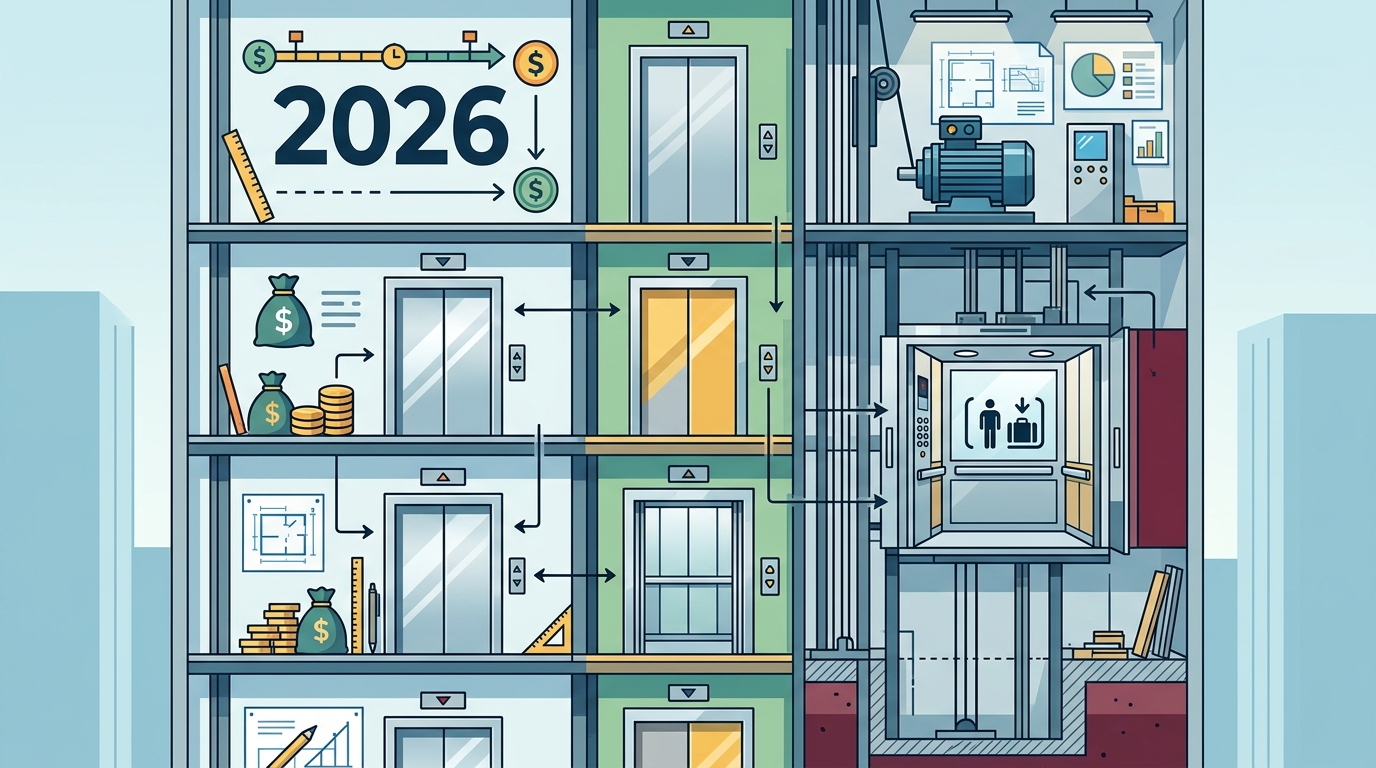
The type of drive system you choose has the single largest impact on installed cost. Below is a comparison of the three most common commercial elevator types.
| Elevator Type | Best For | Installed Cost Range (2026) | Annual Maintenance |
|---|---|---|---|
| Hydraulic | Low-rise (1-6 stories) | $50,000 - $120,000 | $3,000 - $6,000 |
| Machine Room-Less (MRL) Traction | Mid-rise (4-15 stories) | $75,000 - $200,000 | $4,000 - $7,000 |
| Geared/Gearless Traction | High-rise (10+ stories) | $150,000 - $350,000+ | $5,000 - $10,000+ |
Hydraulic Elevators
A hydraulic elevator is a system that uses a hydraulic piston and fluid-powered pump to raise and lower the cab. These units are among the most affordable for low-rise commercial buildings. They offer smooth rides and handle heavy loads, making them popular in retail and small office settings.
MRL Traction Elevators
Machine Room-Less (MRL) traction technology is the fastest-growing segment in commercial elevator installation. MRL elevators eliminate the need for a dedicated machine room, saving valuable square footage. They also deliver better energy efficiency than hydraulic systems.
Geared and Gearless Traction
For high-rise office towers and hotels, geared or gearless traction elevators provide the speed and capacity required for heavy passenger traffic. These systems command premium pricing but offer the longest service life when properly maintained.
Key Factors That Drive Price
Several variables determine where your project falls within these ranges. Understanding them early helps you make smarter decisions during the new elevator supply and installation process.
Building Height and Number of Stops
Every additional landing adds cost for rail, wiring, doors, and hoistway finishing. A 3-stop installation will cost significantly less than an 8-stop system of the same type.
Cab Size, Capacity, and Finishes
Standard cab sizes for commercial use range from 2,500 to 5,000 pounds of capacity. Custom finishes such as stainless steel panels, stone flooring, or glass walls can add $5,000 to $25,000 per cab.
Shaft Construction
New construction projects typically include the elevator shaft in the structural design. Retrofitting an elevator into an existing building often requires concrete or steel shaft construction, adding $20,000 to $50,000 or more to the total budget.
Hidden Costs Most Owners Miss
A supplier quote may only cover the elevator equipment itself. Several additional expenses catch building owners off guard.
Permits and inspections: In Nevada, elevator installations require state permits, plan reviews, and multiple inspections. Budget $2,000 to $8,000 for permit-related fees. Review our guide to Nevada elevator code compliance requirements for 2026 before starting your project.
Code compliance upgrades: States that have adopted ASME A17.1-2019 may require upgrades such as 3D door protection, video communication, and door locking monitors. According to Elevator Blueprint, these additions can cost $15,000 to $50,000 per elevator.
Electrical and HVAC work: Dedicated electrical feeds, ventilation for the machine room or hoistway, and fire alarm integration are frequently quoted separately. Our power efficiency solutions help you plan for energy requirements upfront.
Ongoing Maintenance and Total Cost of Ownership
Total cost of ownership (TCO) is the sum of all expenses associated with purchasing, installing, operating, and maintaining an elevator over its full service life. A commercial elevator is a 25-plus year asset, and the maintenance contract you choose in year one affects costs for decades.
For commercial systems, annual preventive maintenance contracts typically range from $3,000 to $10,000 depending on the system type and traffic volume. Learn more about structuring your budget in our property manager's guide to elevator preventive maintenance costs.
Modern predictive maintenance systems use IoT sensors and AI to analyze motor performance and door-cycle vibrations, alerting technicians before breakdowns occur. While this technology adds roughly 5% to the initial purchase price, it can reduce emergency repair costs by up to 40% over the elevator's lifespan. AR Elevator USA offers GigaLift smart elevator IoT monitoring as part of our service packages.
Nevada-Specific Code and Permit Requirements
Nevada enforces strict elevator safety codes that directly impact installation costs. Building owners in Las Vegas, Henderson, Reno, and throughout the state must ensure full compliance before any elevator can be placed in service.
New installations in Nevada must meet ASME A17.1 safety code standards as adopted by the state. This includes seismic requirements specific to the Western region, fire service access for firefighters, and ADA accessibility standards. For a complete breakdown, read our article on elevator industry regulations in the USA.
After installation, annual inspections are mandatory. Our annual inspection deficiency repair services ensure your system passes every time.
Key Takeaways
- Commercial elevator installation costs in 2026 range from $50,000 to $100,000 per landing for most standard systems.
- Hydraulic elevators are the most affordable option for buildings under 6 stories; MRL traction offers the best space savings for mid-rise projects.
- High-rise traction systems can exceed $250,000 per unit before shaft construction and code compliance upgrades.
- Hidden costs including permits, code upgrades, shaft construction, and electrical work can add $40,000 or more to a base quote.
- Annual maintenance contracts range from $3,000 to $10,000 for commercial systems.
- Nevada-specific seismic, fire service, and ADA requirements add compliance costs that vary by jurisdiction.
- Choosing an open-protocol controller at installation avoids vendor lock-in and allows competitive maintenance bidding for decades.
Frequently Asked Questions
How much does it cost to install a commercial elevator in 2026?
Most commercial elevator installations cost between $50,000 and $100,000 per landing. The total project cost, including shaft construction, permits, and finishes, typically ranges from $75,000 to over $250,000 depending on building height and system type.
What type of elevator is cheapest for a commercial building?
Hydraulic elevators are generally the most affordable commercial option, with installed costs starting around $50,000 for low-rise buildings with 2 to 6 stops. They are ideal for small offices and retail spaces.
How long does commercial elevator installation take?
A typical commercial elevator installation takes 8 to 16 weeks from equipment delivery to final inspection. Complex high-rise installations or retrofit projects may take 20 weeks or longer.
What are the ongoing costs after installation?
Annual preventive maintenance contracts for commercial elevators range from $3,000 to $10,000. Additional costs include annual inspection fees, energy consumption, and periodic component replacements over the elevator's 25-plus year lifespan.
Does Nevada have special elevator code requirements?
Yes. Nevada enforces ASME A17.1 safety code standards with additional seismic requirements for the Western region, mandatory fire service access, and ADA compliance. New installations effective January 2026 must meet updated safety requirements.
What is the difference between elevator modernization and new installation?
Modernization upgrades the components of an existing elevator system, such as the controller, motor, and cab, while keeping the existing hoistway. New installation involves building the complete system from scratch. Read our detailed comparison of modernization vs. replacement to determine which option fits your building.
Can I install an elevator in an existing commercial building?
Yes, but retrofitting an elevator into an existing structure typically costs 20% to 40% more than new construction installation due to shaft construction, structural reinforcement, and code compliance upgrades.
Get a Custom Commercial Elevator Quote
Every building is different, and accurate pricing requires a site assessment. AR Elevator USA provides transparent, detailed quotes for commercial elevator installation throughout Nevada and the Western region. Our team evaluates your building's structure, code requirements, and traffic needs to recommend the right system at the right price.
Request your free elevator installation quote today and let our licensed engineers guide you from planning to final inspection.